|
Interview with Richard Bartle: The Psychology of Play and the Future of Virtual Worlds7/22/2026
Legendary designer Richard Bartle on the future of virtual worlds and the true meaning of games.
|
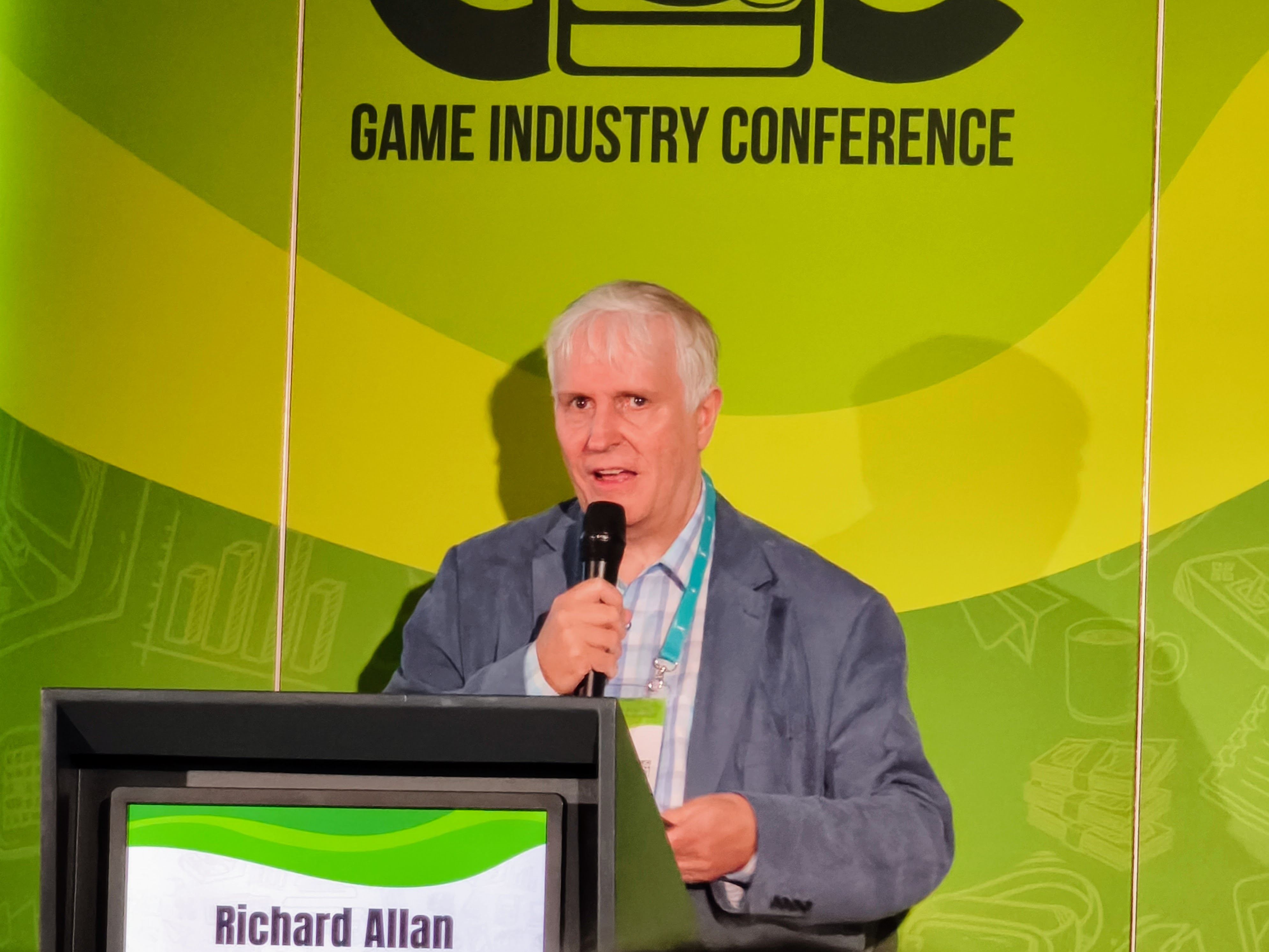
For younger generations, the name Richard Alan Bartle may not ring a bell, but he is a true gaming legend who stands behind the creation of the very first MMORPGs. Together with Roy Trubshaw, he developed MUD (Multi-User Dungeon) in 1978 — the first text-based multiplayer virtual world that laid the foundations for modern online RPGs such as World of Warcraft and Final Fantasy XIV. Bartle is also the author of the well-known Bartle Player Type Test, which categorizes players into four groups — Achievers, Explorers, Socializers, and Killers — and is still widely used in online game design today. He currently serves as a professor at the University of Essex, where he teaches game design, artificial intelligence, and the psychology of virtual worlds.
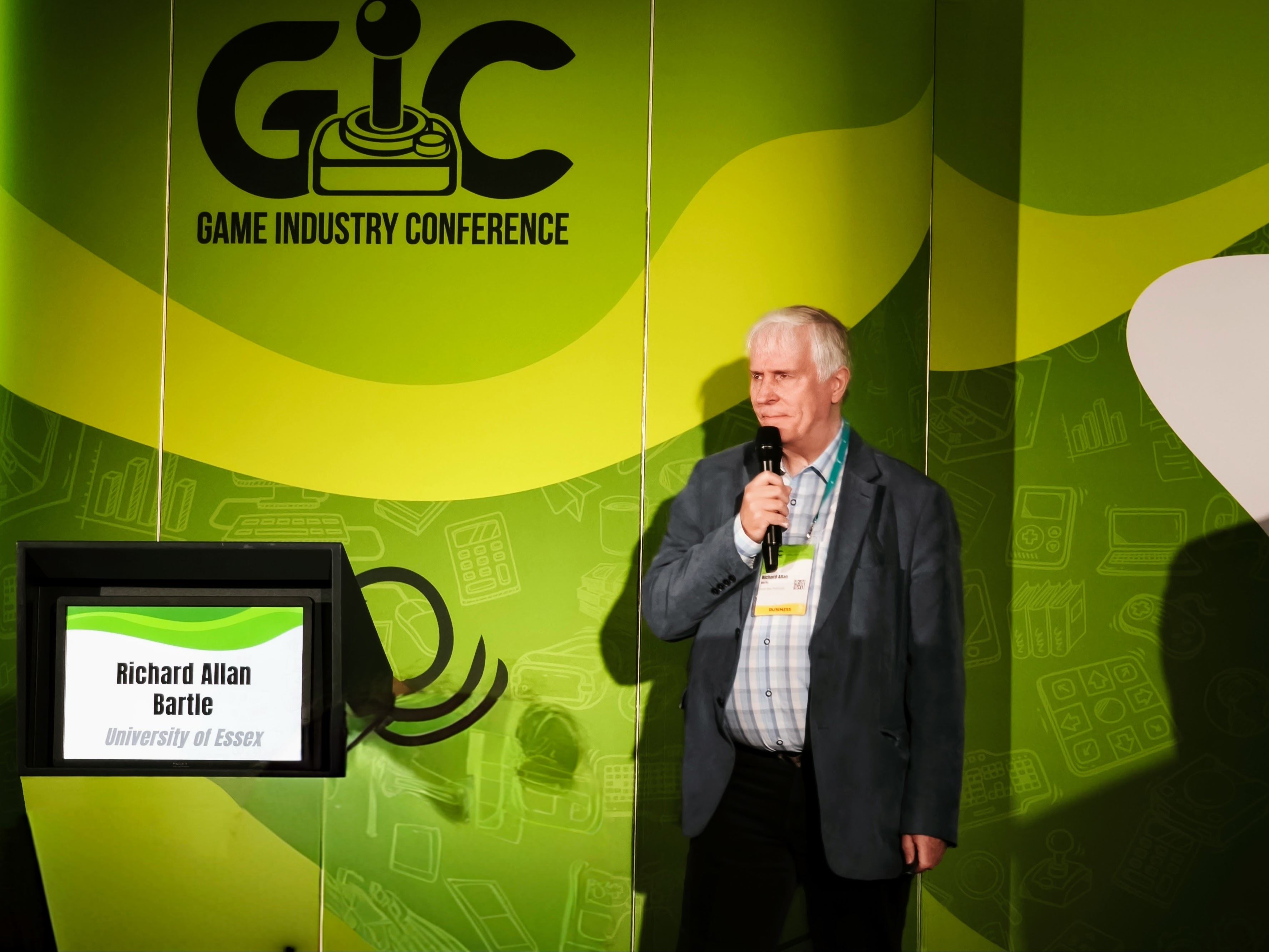
We managed to catch up with him during the GIC conference in Poznań, where we attended his lectures. We were delighted that, among all the attendees, he found a few minutes to give us an exclusive interview.
What do you think about player motivation in modern MMORPGs? Do you believe the motivations of players have changed over the past 20 years?
No, I don’t think player motivations have changed in the past 20 years. What has changed is how virtual worlds respond to those motivations. Players still play for the same fundamental reason — to find out who they are by pretending to be somebody else. That desire for self-exploration will always be there.
The problem is that many modern virtual worlds don’t serve those needs very well. Developers often prioritize reaching the largest possible audience, rather than speaking to players artistically or emotionally. As a result, the games may feel broader, but less meaningful.
You often highlight the power of text in contrast to image-driven design. In a world dominated by high-fidelity graphics, what do text-based virtual worlds capture that fully graphical ones still struggle to achieve?
Let me give you a short version of something Isaac Asimov once wrote. We started with text — and then came graphics, and later sound. The goal was to make worlds feel more real. Then came 3D graphics, and perhaps someday we’ll have full immersion suits, or even neural links that plug directly into our brains.
But even in that scenario, the experience would still be the same for everyone. A spider might terrify one person, but not another, depending on their perception. The ultimate form of immersion doesn’t come from the senses — it comes from the mind.
Text speaks directly to the imagination. When I say the word table, you instantly know what I mean — and you picture your own version of a table. That’s true communication. Text was the beginning of virtual worlds — and, in a way, it might also be their end.
That reminds me of how personal imagination shapes experiences. For example, when I watched Apple’s adaptation of Foundation, I felt disappointed — because the world on screen looked completely different from what I imagined when reading Asimov’s books.
Exactly. The world you built in your head didn’t match the one presented visually. Graphics are very immediate — about 60% of all information we process comes through sight — so they can be powerful. But they’re also limiting. Text, on the other hand, allows deeper immersion once you give it a chance. You feel like you are in that world. With graphics, you’re mostly looking at it. Sadly, people often don’t give text the opportunity to engage them that deeply anymore.
What is the single most critical element developers must get right to ensure long-term player retention and prevent burnout in virtual worlds?
My opinion — which isn’t shared by everyone — is that developers should let players finish. A player should be able to reach an endpoint and feel satisfied. You shouldn’t keep them playing beyond that point with artificial incentives like “I can’t quit because of my guild.” Imagine a game where you’re escaping from a war camp — you plan, you execute, and finally, you succeed. You finish and feel fulfilled. That’s a complete story.
If players want to continue, they can start a new character, or take on a new role, like leading the next escape attempt. But the key is choice. If you give players closure, they’ll feel accomplished — and they’ll come back for your next game. If you force them to stay, they’ll eventually leave disappointed.
Where do you see the most significant — and perhaps most ethically challenging — applications of AI in improving NPCs and the overall virtual experience today?
That depends on what developers want their AI characters to do. My PhD was in AI, and back in the day, I gave some of my MUD 2 NPCs real intelligence — they were actually smarter than the players! I eventually had to dumb them down because they were winning fights too easily. They weren’t cheating; they were just thinking strategically, planning their next moves logically. Intelligent NPCs can make the world feel more alive and believable. However, I dislike systems like dynamic difficulty adjustment, where the AI manipulates gameplay to match the player’s skill. At that point, you’re no longer playing the game — you’re playing the AI.
What lessons from MUD do you think are most crucial for creators of new metaverse and virtual world concepts today?
Most developers today aren’t even aware of MUDs — or the lessons they carry. When Roy Trubshaw and I created MUD, we were trying to tell players something meaningful: You are free to be and become yourself. It wasn’t just a world to play in — it was a world to explore who you are. That’s what game designers should aim for — to say something to players. Otherwise, games are just craft, not art. Games can and should communicate messages about the human condition, just as books or films do. They should make us think, feel, and reflect. That’s what gives games purpose.
Thank you very much for your time.