|
Building Masterpieces and Navigating Chaos: David Mullich Reflects on Heroes III, Bloodlines, and Four Decades in Game Dev8/17/2026
From the mind-bending psychological challenges of The Prisoner to the dark and thought-provoking narrative of I Have No Mouth, and I Must Scream, and the genre-defining success of Heroes of Might and Magic III, Mullich's work has consistently pushed
|
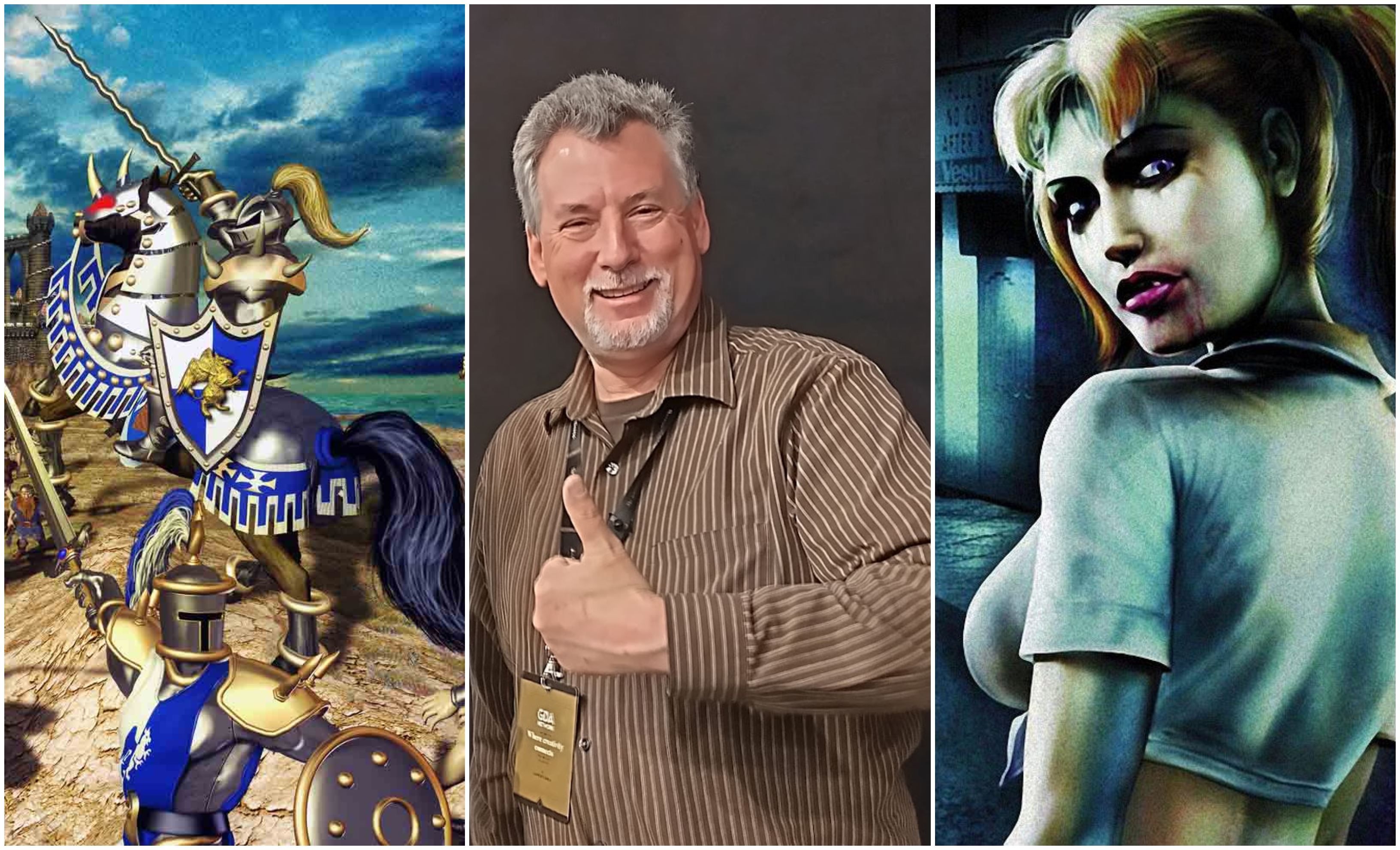
With a career spanning several decades, David Mullich has been at the helm of some of the most innovative and memorable titles in video game history. From the mind-bending psychological challenges of The Prisoner to the dark and thought-provoking narrative of I Have No Mouth, and I Must Scream, and the genre-defining success of Heroes of Might and Magic III, Mullich's work has consistently pushed the boundaries of interactive entertainment.
We had the opportunity to sit down with David Mullich during Game Access conference, to reflect on his illustrious career, the inspirations behind his most iconic games, and his thoughts on the ever-evolving landscape of the video game industry.
The Prisoner was a very unique game with an unusual intent to trick the player into losing. Can you share the inspiration behind this approach to game design?
Well, the inspiration behind The Prisoner was the 1960s British television series of the same name. The show is about a man, who we assume is a secret agent, who is kidnapped and brought to a remote village. There, his captors try to get him to reveal why he resigned from his job. They do everything they can to trick him into revealing that information.
That's what I do in my game. My game is an adaptation of the television series, and in it, I gave the player a code number that they weren't supposed to reveal at any point. If they ever typed it, selected it, or even inadvertently acknowledged it, they would lose the game.
I Have No Mouth, and I Must Scream is a game that tackles heavy themes such as guilt, insanity, rape, genocide, and the nature of humanity. How did you approach adapting these themes into a game format, and weren't you afraid that the game would be banned?
I Have No Mouth, and I Must Scream wasn't a violent game, but it did deal with controversial topics. Controversy itself didn't bother us. We made it clear that it was a game for mature audiences and, in fact, we welcomed the controversy.
One of the scenarios is about a character named Nimdok, who was a former Nazi scientist, and his scenario was all about the atrocities he committed during the Holocaust. When the Simon Wiesenthal Center found out we were making this game, they wrote a letter to us asking us to remove it from the game because they thought that we were trivializing the Holocaust. We thought that they made the mistake of thinking that games are toys. They're not. We considered games to be serious forms of literature. So while they wouldn't want to ban a story about a character from the Holocaust, we didn't think they should want to ban a video game taking place in the Holocaust.
Our reaction to it was, you know, “bring on the controversy!” We thought that would popularize our game. As it turned out, we never heard from them again, so we never got any publicity out of it. But we weren't concerned about the government banning the game for controversial topics. In fact, according to the First Amendment of the United States Constitution, political speech is permitted. So talking about difficult topics is not something that we would expect the government to ban. Maybe they would protect children from extreme violence and extreme sexuality, but not ban a complete work.
Can you talk about your collaboration with Harlan Ellison, the author of the original story? What was it like to work with him on this project, especially since he wasn’t a fan of computer games?
Yeah, Harlan Ellison was not a fan of video games. He'd never even played a video game before. Unfortunately, I wasn't with the project at the very start, so I don't know how he became convinced to allow a video game adaptation to be made, nor do I know much about the initial collaboration between him and the original designer, David Sears. I took over the project after David Sears had left and took it upon myself to complete the game design.
I know that when I first met Harlan, he didn't treat me with a lot of respect, and I interpreted that as him being worried that his work would not be properly represented. But I think I quickly showed him that I saw video games as a legitimate art form and a legitimate vehicle for storytelling. I was a fan of his work and I would treat it very seriously to create an adaptation he would be proud of. Once he heard that and I convinced him of my seriousness, I think all of his reluctance melted away.

Heroes of Might and Magic was already an established and successful series. And yet, your team has managed to surpass that success with Heroes of Might and Magic III, and many fans consider it the pinnacle of the series. What were the key changes you needed to make in order to turn Heroes of Might and Magic III into such a successful installment?
Yeah, when I was tasked with creating a sequel to Heroes of Might and Magic II, I was worried that we wouldn't create a game that was as good as the previous one. So I knew that we couldn't make too many changes to it. Any change that we made would be at a risk of making it worse.
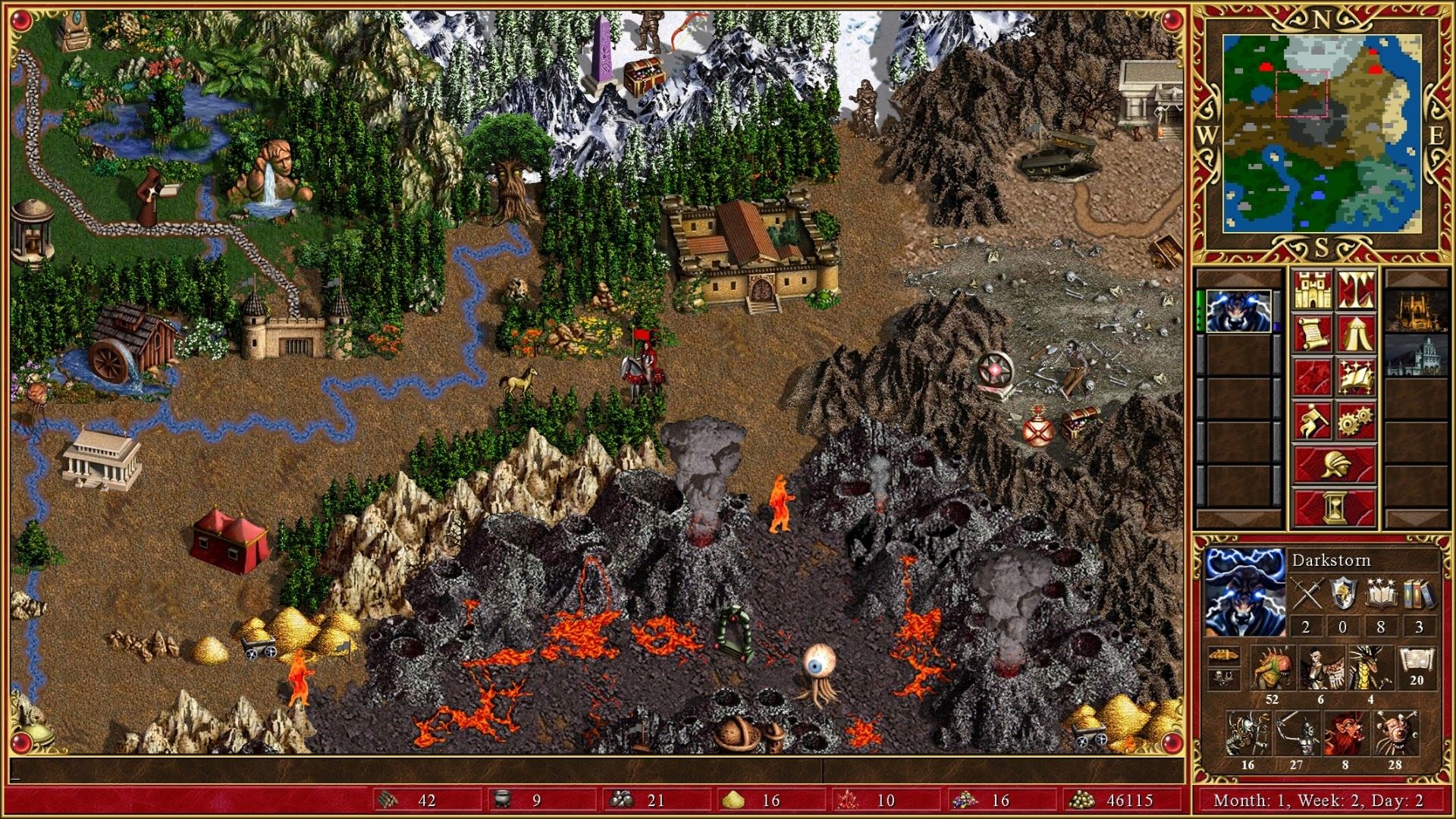
So there were two directions that we headed in. One was improving the quality of the artwork and even changing the tone of the artwork from being more of a cartoony look to a much more dark and gritty look with the characters. And then secondly, we added more content to it. So we increased the number of towns, which resulted in an increase in the number of creatures. We added more heroes and spells, changed the way the spell system worked, and introduced war machines. So besides the catapult, there was a ballista and a medicine wagon and some other things.
We didn't make any real major changes to the game mechanics. I think basically what we did is we took a very solid foundation and just expanded upon it. And I think we introduced the right amount of complexity that it became an even deeper game. So deeper by more content, not by changing the game rules. We even used the same game engine and we built upon the code. We didn't rewrite any of the code. So I think we just took what was a very excellent kernel and built upon it enough that it achieved its full potential.
Heroes of Might and Magic III is still thriving today thanks to its loyal fanbase and modders. Why do you think the series is such a huge phenomenon, especially in Europe?
I have no idea why. I don't live in Europe. I haven't studied Europe. I've only visited it occasionally. And while I've had a great time visiting Europe, I can't claim to be an expert at understanding Europeans. So I don't have a good explanation why it's more popular in Europe than it ever was in the United States. All I can say is that I'm surprised and pleased with its continued popularity.
During your talk, you mentioned that The Armageddon's Blade expansion turned out to be a completely different game compared to what you had in plan, because of the reactions of the fan base to the concept art for the Forge town and its units. Do you think the European fan base would be more accepting of the sci-fi twist in the game?
Well, the fan base was definitely against science fiction and the Forge, and they told us that from the very day they saw the first concept artwork. So they made that very clear. They were against it.
I don't know how Europeans would have reacted to it. I hope Europeans are more enlightened than Americans are. I know that there were some people who complained about the Naga artwork, that it showed too much of the Naga's anatomy. Americans are much more prudish, I think, than Europeans are and have a harder time dealing with nudity. So maybe that particular aspect of the character would not have bothered Europeans as much. I was surprised by the reaction, and I think that the Forge would have been a great addition to the game. We did okay with the elemental town that replaced it, but I would have preferred the Forge town.
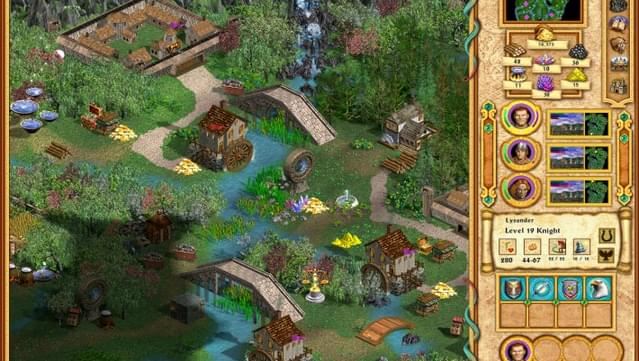
You’ve mentioned that the development of Heroes of Might and Magic IV wasn’t as smooth as with Heroes of Might and Magic III. How has that affected the final product in your opinion?
Well, because there was a lack of harmony among the crew, among my team, I think that showed in the game. There wasn't as much harmony within the gameplay, and I think the artwork wasn't as iconic as it could have been. I also think that the maps that you played upon, the story, and the strategy elements of the game did not work in as much harmony as they did in Heroes III.
You mentioned that the art director wanted more creative freedom. So, was the whole team content with how the game turned out?
The art director wanted more freedom, yes, not to stick with traditional imagery. And no, I don't think we were content with how it turned out. I think the team was fighting with each other all throughout the development and all the way through the end. My own manager told me to have a lighter touch, be more laissez-faire in my management with Heroes IV than I did on Heroes III. I think some of the artists on Heroes III complained that I was too restrictive on what they could do, so I was ordered not to be as restrictive, and I think that was a mistake because without me saying, "This is the way things are going to be," I left things too open for them just to fight with each other.
Heroes of Might and Magic IV received mixed reviews from fans and critics. How did you feel about the reception of the game, and would you have done anything differently in hindsight?
I liked some aspects of Heroes IV. I liked some of the artwork, how it turned out, and I liked some of the technical innovations that were done in it, such as the elevated terrain on the maps. But it's always disappointing when something isn't as big a hit as the previous version of the game. By then, I was no longer with New World Computing. 3DO, our parent company, had sold off the IP to Ubisoft, so I was on to other things by then.
The game not only has this addictive gameplay, but it also has some of the most beautiful scores of all time. Were you involved in the process of choosing music for the game?
What I did was I talked to our audio director, Rob King, and I told him, "These are the pieces of music we need, and these are the emotions that they should evoke, each one." And I said, "This is a terrain that it would take place upon, I need an adventure version and a combat version for each." That's pretty much the only direction I gave.
What do you think about the Heroes of Might and Magic installments by Ubisoft?
When I went to the Electronic Entertainment Expo, I visited the Ubisoft booth and I heard them do a presentation of Heroes V while it was still in development. I realized that since I was no longer working on the game, I lost interest in hearing what they were going to do with it. It was no longer my baby, so I'm sure if I had heard any details, it would just make me upset, so I stopped listening.
I'm just glad that the franchise hasn't died. I am happy that there are more installments being made, and I'm happy that fans are making mods and people are doing artwork. I'm happy that there are "Heroes III" cosplayers and people creating "Heroes III" videos. I think it's all just great.
What are your thoughts on Heroes of Might & Magic III - HD Edition?
From what I hear, the reception to it wasn't great. It lost something. Either it didn't achieve its full potential, or it lost something in doing the HD version.
The HD Edition was criticized for not including the expansions. At the time of release, Ubisoft claimed that they lost the source code for the expansions. Are you aware that some of your work was somehow lost?
I was not aware that they had lost some things in doing the HD version, so I'm hearing this for the first time. I'm devastated by it. Nothing is ever truly lost as long as we remember it. It's always possible that someday, some fan will create a mod that will restore it, or somebody is going to do a new version of the game.
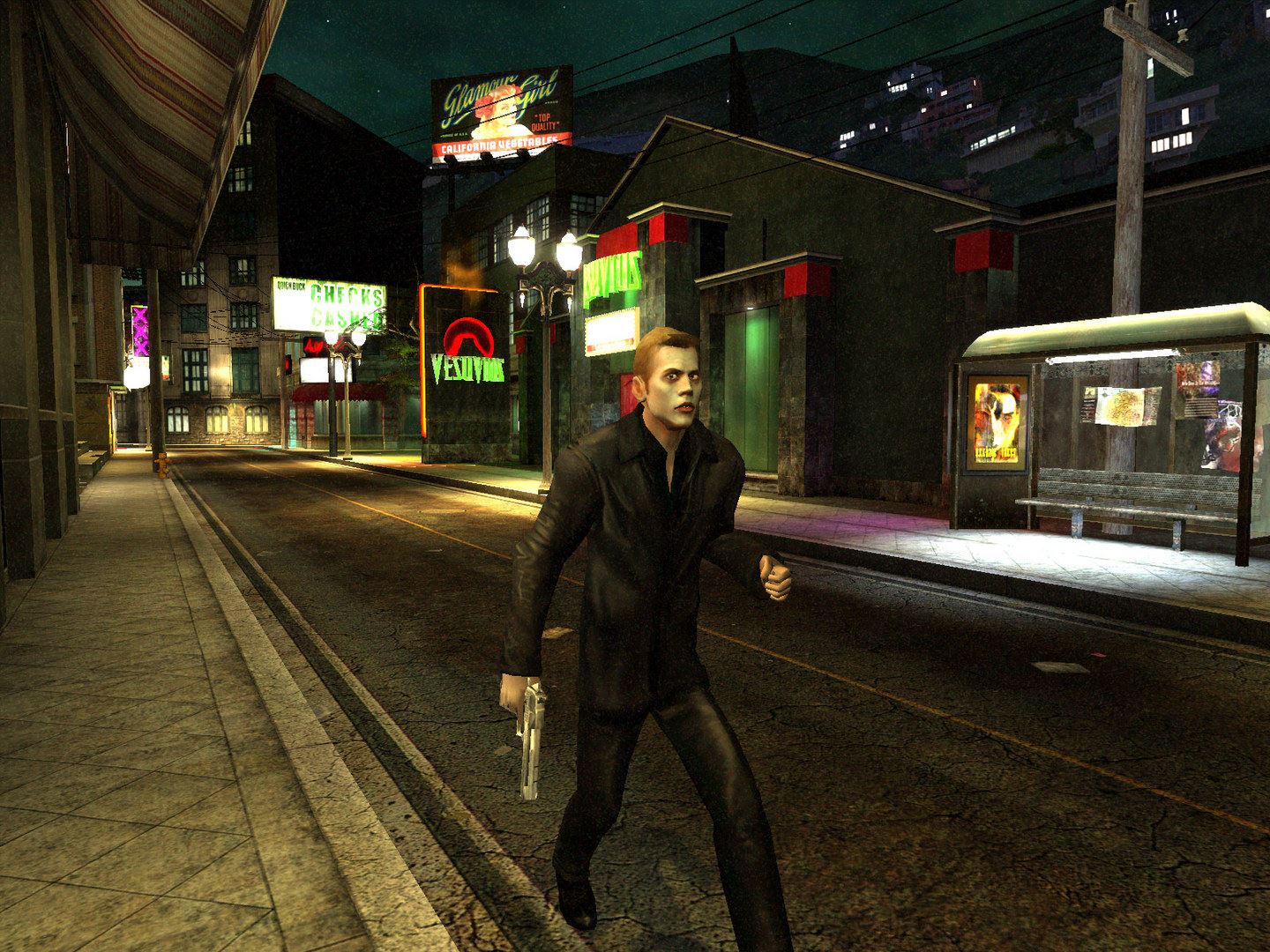
What was your involvement in the production of Vampire: The Masquerade - Bloodlines? In your talk, you mentioned that you stepped in rather late in the development process.
They were in the middle of the project, and they were having problems finishing it. One of the problems was that Activision had contracted with Valve to make use of the Source engine they were developing for Half-Life 2. The problem was Valve kept making changes to the Source engine, and with every change to the engine, it would invalidate a lot of the code that was written for Vampire. So that was a difficult thing. We had several meetings. I flew up to meet with Valve several times, but the problem was never resolved because they had their priorities.
Another problem was that Troika itself had a reputation for shipping games that were buggy, and we think that was because they wouldn't complete work on a feature soon enough to allow enough time for testing, debugging, and fixing. My job was to get them to finish things up. I think I did a decent job in getting the focus on finishing elements of the game and then moving on to the next. I think we set up a good process for doing that by bringing in testers on site, and we took control of the source code so that every time they made an addition to it, it had to be associated with a bug that we reported. So I think we did a good job keeping them focused on just fixing stuff instead of adding new stuff, but we needed at least two more weeks on the project.
Unfortunately, it was two weeks Activision would not give us. Maybe I could have done a better job trying to convince them to give us more time, but Activision had actually extended the deadline several times already. Those two weeks would have made a huge difference. The bones of the game were good, if I could use a bones metaphor. It was a nearly finished game. All it needed was a little bit more work.
In your talk, you mentioned that you are into high fantasy, and I know you’re a big fan of The Lord of the Rings. Have you thought about working on a high fantasy RPG?
I interviewed to be a producer on Lord of the Rings Online. Unfortunately, it would have meant me moving to Maryland, and I've lived all my life in Los Angeles, and I wasn't willing to commute. We never got beyond initial discussions about that, but I certainly would have loved to make a fantasy RPG someday.
Not even during your time in New World Computing when they were working on Might and Magic?
No, I had my hands full with Heroes of Might & Magic. The Might & Magic RPG had its own producer, so it didn't need my involvement.
During your talk, you mentioned that some videogame companies would not employ you because of your age. What do you think are the reasons that companies avoid employing older videogame developers? Is it because they think that veterans don't have much to say to a younger generation of players?
Well, it's generally ageism. It's been a problem in the game industry. And usually the thought was, “Well, most people that play games are young, therefore young people need to make games,” which I think is a fallacy because in truth, people of all ages play games, and it's possible for a person of one age to make a product for someone of another age. Certainly, we don't have children's television shows being written by children. So it's fallacious thinking, but it's still a problem that we haven't learned how to overcome.
Have you thought about working on an indie project and just releasing something small?
I worked on small projects and I had my own company when I was in my 20s. I don't think I could do that right now because of the risk of doing indie development. I think that's—at the risk of being ageist myself—more of a young person's domain. Anything I work on now, I would need to feel more assured that I would get paid for.
You’ve been in the game industry for a couple of decades; you’ve seen how it has evolved. What do you think about the changes that artificial intelligence is going to bring into this industry?
Well, there's a lot of fear that artificial intelligence is going to cause a lot of jobs to disappear. I've heard people complain that we won't need artists anymore, or we won't need programmers anymore. I don't believe that at all. I think that AI will become a tool that may help get some simpler things done more quickly, but I think there will always be a need for expert artists and expert programmers to handle both the more complex tasks as well as to evaluate the work that the AI is doing. It may be that programmers and artists will use AI to get the basic work done, then they will go in and add the more complex elements or the polishing or final touches to it.