Načítavam…
Thanks to Thronebreakers, P.T. Adamczyk has the best foundations for composing Witcher IV

P.T. Adamczyk is a name that resonates with virtually every fan of the Polish studio CD Projekt Red. And quite literally so, since this composer is responsible for many of the adrenaline-pumping masterpieces from Cyberpunk 2077 and is now defining, note by note, the new sound of the giant that The Witcher IV will undoubtedly become. Thanks to his extensive experience with the Thronebreaker and GWENT spin-offs, it is clear that the latest installment of the Witcher saga has a solid foundation. And if that were not enough, Marcin Przybyłowicz, Mikołaj Stroiński, and the group Percival already established such a unique musical identity for the series back in 2015 that it provides a rich source of inspiration.

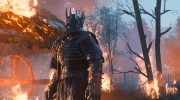
After all, we already got a glimpse of the soundscape of the upcoming adventure—this time from Ciri’s perspective—in the song No Gods, Only Monsters, which accompanied the reveal trailer released at the end of 2024. Dark, atmospheric melodies played on familiar instruments, folk-inspired accents blended with choral elements, and a conclusion hinting at the journey that lies ahead for the protagonist. From a musical standpoint alone, The Witcher IV is off to a very promising start. However, P.T. is the essential element in determining how it will all come together, which is why we spoke with him at this year’s Digital Dragons conference in Kraków about the path that ultimately led him to this latest project.

Thanks to Thronebreakers, P.T. Adamczyk has the best foundations for composing Witcher IV
 

When CD Projekt Red began revealing more information about Cyberpunk, we learned that the developers had set a goal of making the city itself feel like a living character. How did that influence the music? Did you try to apply a similar philosophy when composing for the game?

Absolutely, but it wasn’t just about composing. It also influenced how we searched for performers, commissioned songs, and assigned the creation of new tracks. We tried to build a collection of music that was as diverse as the city itself. For example, if a certain group of people living in the city was described to us, we would try to find a musical equivalent for them while composing. So that was one aspect.

Then there was the city itself—it was a very fast-paced and hectic place, and that had a huge impact on how we searched for the musical language of the soundtrack. It’s not something for the faint of heart. Neither Night City nor the music we created for it. So I would say that the city was an absolutely essential part of our creative process.

Since you mentioned the city’s chaos, that ties into my next question. It’s a chaotic, layered metropolis full of dark alleyways, dangerous outskirts, sex clubs, and cyberware shops. Yet you managed to convey all of that through music alone. How?

All of the good things. [laughs]

Well, I’m very grateful for that comment—that’s very kind of you. But in reality, we were simply trying to keep up with the designers and everyone else working on the game. Because without them, without that initial spark and everything they were putting on the screen, we wouldn’t have had anything to set to music. So I would say that the game itself, the story, the characters, and the world-building come first, and we merely try to keep pace with them.

From a somewhat semi-technical perspective, and also in terms of world-building and making the setting believable, it was critical for us to sell the idea that music is everywhere and that people in this world actually listen to it. At the same time, I think we may have overdone it in some respects. When you walk around Kraków—or any other large city—you don’t actually hear music all that often. So I think we could have toned it down a little in the end. But the truth is that we’re incredibly fortunate to work with the people we work with.

The game's diverse soundtrack draws inspiration from different genres, styles, and countries, yet it still feels cohesive. What is the “glue” that holds it all together?

That’s an interesting question—I was asked the same thing yesterday during a casual conversation by the coffee machine. I’d say that aesthetics prevail above everything else. So when a small group of people is responsible for the work, they naturally impose their own aesthetic regardless of the instruments, the situation, or anything else. I think it would be very difficult to achieve something like this with a team of 80 people. But having only three composers made it both easier and manageable. We were able to take the best elements from different perspectives while still meeting at the same point in the end. We were all creating something inspired by the same influences—’90s music, techno, industrial, or whatever label best describes it—and it all fit the game’s title and the IP itself. I think that’s the key—that’s the glue.

I was originally hired by Marcin, so I think there was something in my portfolio that caught his interest. And of course, Paul Leonard-Morgan was hired specifically because he had worked on Dredd, and we really liked that film in relation to Cyberpunk. So I think that partly answers the question as well. On paper, there was already evidence that this combination of people could make it work.

Thanks to Thronebreakers, P.T. Adamczyk has the best foundations for composing Witcher IV
 

Following up on your previous answer about the collaboration between three composers, I wanted to ask specifically about Marcin. You’ve been working together on projects for quite a long time. What does your collaborative process for creating a soundtrack actually look like? Does each person take a different leitmotif, several themes, or perhaps a particular district of the city? How does it work exactly?

I’d say the most effective way to handle it is simply: “Okay, I’ll do this part of the game, and you take that part.” I think there’s only one track that we actually wrote together, and it’s not even in the game—it ended up appearing in Edgerunners. Two people working on the same track, let alone on the same computer, already counts as a crowd, and I’m not particularly fond of crowds. So it’s not something I’m especially comfortable with. I think the best way to manage the process is exactly as I said: for example, I’ll handle Johnny Silverhand and the Nomads, while you take Arasaka and the themes surrounding it. That’s essentially how it started.

But then, of course, the usual chaos of game development kicks in, and you end up doing whatever is needed. All the plans go out the window and you simply create. That’s exactly how it ended, and honestly, that’s how it always ends. Still, at the beginning we did have a very clear division of responsibilities regarding who was working on what.

Did you actually have any visual material available at the time, or were you working solely from concepts and descriptions?

Yes, we did. In the case of Cyberpunk, I think we were working from visuals right from the very beginning. And of course, when I say “working from visuals,” I don’t mean what players see now. I mean T-poses, synthesized voices, gray blocks scattered across the map, and things like that. But I think there was already something there that was sufficient for us to work with. So I would say that, yes, everything was created with the visuals in mind.

You mentioned Cyberpunk: Edgerunners, which brings me to another question. It’s not only one of the best anime adaptations of a video game, but also an incredibly good project in its own right. I was wondering what the creative process was like and whether it differed from composing for a game.

To be completely honest, I only wrote one track for it, because all the other music was actually taken from the game. And that was somewhat beyond my control, to a certain extent, because those decisions were made by the creators of the series. So I can’t really give a definitive answer to that. Although I completely agree with your opening statement—it’s a damn good show.

Since my next question was also about Edgerunners, and you mentioned that most of the soundtrack came from the game, I can’t really imagine what collaboration with Akira Yamaoka was like—or whether there was any collaboration at all.

Well, Marcin was leading that collaboration, so I think he would probably have all the answers. But I do think we were very fortunate to have him involved in the project.

Thanks to Thronebreakers, P.T. Adamczyk has the best foundations for composing Witcher IV
 

I know we probably won’t learn much about The Witcher 4, so I’ll keep this a bit more general. Do you think working on Thronebreaker helped prepare you for a giant project like a mainline Witcher game?

Yes, because I believe our version of fantasy is a very unique experience that only we can offer. And by that, I mean our specific take on the fantasy genre. It’s something players won’t really find anywhere else. There are certain rules, certain pillars—things you should do and things you shouldn’t do. There are things that simply feel “Witcher-like” from an aesthetic perspective, and things that don’t.

I think working on—well, I don’t want to call them smaller titles, but titles within this franchise—is definitely a huge advantage and a dream starting point for a composer. You’re already beginning with the “language” of the series partially established.Of course, we want to innovate, but we still have at least one foot in the door—or at the very least, the tip of a little finger in the door. So it definitely shortens discussions with the game director, reduces the time spent searching for references and materials, and gives you the feeling that you’re looking in the right direction more often. In that sense, it’s an enormous head start.

The Witcher series is known for its strong use of folk choirs. What was it like for you to work with voices?

It’s funny, because here at Digital Dragons I’m giving a presentation about a professional lesson I learned while composing for Cyberpunk: Phantom Liberty: everything sounds important when there are vocals involved. Everything! If you want something to sound big, epic, important, emotional, and so on, then yes—have a choir sing it, or a vocal trio, or something similar. Vocals are incredible. I think that, on one hand, they’re very difficult to write for, but on the other hand, they’re also very easy to use effectively. And I believe what Marcin did in The Witcher 3 really set the tone not only for our IP but, to some extent, for fantasy music in general.

Nowadays we hear more earthy, somewhat dark, folk-inspired colors, voices, and vocalizations across different media than we did before. Even when we think about folk music in general—which is one of the pillars of The Witcher’s musical identity—I can hear that influence. What you feel in The Witcher is primarily European folk music, which is deeply rooted in vocal performance. The melodies are often designed to be sung by people, and that isn’t the case in every culture or every part of the world. So I think singability and vocalization—and especially the way we use them—are strongly connected not only to this part of the world but also to The Witcher’s identity.

Do you ever write lyrics yourself? Or at least outline what a song should be about? I’m asking because Jan Valta, the composer of Kingdom Come: Deliverance, told us in an interview that he wrote some of the songs himself. So I was curious about your creative process.

No, I usually ask our localization director to do that, and Marcin is involved in the process as well. Let me put it this way: I don’t consider myself a lyricist. Honestly, I wouldn’t even know where to start. If you ever get a chance to meet Boris (the localization director I mentioned), you’ll immediately understand why I ask him to write the lyrics. Five minutes with him is enough to realize that he’s the kind of person you only meet once in a lifetime, and on top of that, he’s an excellent writer. That said, I do enjoy writing songs, especially the ones that appear in our games. But I only write the melodies and produce the songs as a whole. I leave the lyrics to colleagues who are more talented in that area.

What would you say is the main difference between composing for science fiction and for fantasy? Is it just about the instruments, or does it also involve composition, leitmotifs, and similar elements?

I actually think about this often, including recently. I’d say that especially when I think about our style of games and what we did in Cyberpunk versus what we generally do in The Witcher, if you’re working with electronic music, you go from detail to the whole, whereas more acoustic music goes in the opposite direction. What I mean is that if, for example, we’re writing a melody that’s, say, 32 bars long, there’s not much point in orchestrating it or working on the arrangement until the melody itself is finished. Electronic music is the complete opposite. If the bass or the samples don’t work in the first bar, there’s no point trying to fill out the rest of the track—it simply won’t work.

That’s the main difference. And since we’re doing electronic music in Cyberpunk, the fundamental distinction is that you start working on a different level, within a different scope. But of course, with sci‑fi, you can do much more—I think in general it’s a broader genre, and you can afford to try more things than in fantasy. Still, both are equally very cool.

Thanks to Thronebreakers, P.T. Adamczyk has the best foundations for composing Witcher IV
 

Can you imagine a fantasy soundtrack with electronic music?

I think there have already been fairly successful attempts at something like that. Maybe not entirely purely electronic—so no techno in the style of Night City playing in a tavern—but electronic music is actually a very broad genre. When we think of it, we imagine synthesizers or something similar, but in reality it’s a very wide field. It can be very subtle, very delicate, and it can sound almost acoustic. So yes, I can imagine it.

My last question is about the protagonists of The Witcher. We know that Ciri will be the protagonist of the fourth game. Do you think that changing the main character has somehow changed the overall approach to composing the music?

I have a funny story about that, because I became a father around the time I started working on The Witcher IV, and whenever I compose a scene with Ciri, I see my daughter in her, which is a bit strange. So to some extent, yes—at least for me personally.

But if I think about it more seriously, I don’t think that changing gender or age—that is, moving from Geralt to Ciri—changes anything fundamentally. I think the stories we tell are universal and could work with different characters. From my point of view, it doesn’t change anything. I’d say it might push us to work a bit harder, to prove to skeptics that it’s the right decision. But I can assure everyone that everyone working on this game has only the best intentions for The Witcher.

Comments

:)