FSR 4.1 will also be supported on Xbox Series X/S consoles, but its release date is still unknown and its use will depend on game developers.
SBy saver
AMD is expanding its FidelityFX Super Resolution 4.1 technology to more hardware, including consoles for the first time. The company has officially confirmed that FSR Upscaling 4.1 is coming to Xbox Series X and Xbox Series S. The technology is also expanding to gaming handhelds and older Radeon graphics cards.
For current Xbox consoles, AMD has only said that it will be available “soon” and has not announced an exact date. FSR 4.1 will be usable on the same Xbox Series X/S hardware, which is based on the RDNA 2 architecture. AMD is also now extending FSR 4.1 support to the Radeon RX 6000 series, which is likewise based on RDNA 2.
FSR 4.1 uses machine learning to reconstruct images and is designed to deliver a higher-quality, more stable image than earlier FSR versions. A game can be rendered internally at a lower resolution and then reconstructed at a higher output resolution, potentially freeing up some performance for a higher frame rate or more demanding graphics settings.
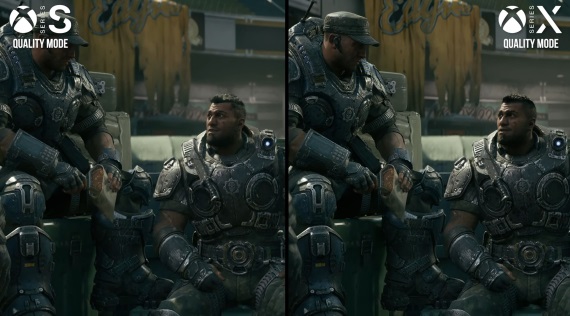
This could be especially useful for Xbox Series S, which has significantly less performance headroom than Microsoft’s other current console. However, this does not mean that all games will automatically get better graphics or a higher frame rate after a console update. FSR is a technology that must be implemented in games, so its use will depend on individual developers and game updates.
FSR 4.1 is also expanding to handhelds
AMD has also significantly expanded its list of supported hardware. FSR Upscaling 4.1 now supports Radeon RX 6000, Ryzen AI Max and Ryzen AI 9 processors, and handhelds with Ryzen AI Z2 Extreme, Ryzen Z2 Extreme and Ryzen Z2 A chips.
This group also includes devices in the ROG Xbox Ally family. Microsoft is gradually bringing the same upscaling technology to both its consoles and Windows-based portable devices.
Project Helix will go further
Xbox Chief Technology Officer Scott Van Vliet also spoke at the announcement, and Microsoft’s collaboration with AMD extends beyond current consoles. The two companies have been jointly developing next-generation hardware, known as Project Helix, for some time.
The new Xbox will feature a custom AMD SoC, and Microsoft has previously confirmed a strong focus on new rendering techniques, ray tracing and machine learning. When it unveiled Project Helix, the company said it would deliver an order-of-magnitude increase in ray tracing capabilities compared with the current generation. Microsoft plans to provide developers with the first alpha versions of the hardware starting in 2027.
Project Helix is also linked to AMD’s next-generation technology, called FSR Diamond. It is being developed specifically with the new Xbox in mind and is intended to combine next-generation ML upscaling, machine-learning-based multi-frame generation, and advanced ray regeneration for ray tracing and path tracing.
For now, Microsoft is pursuing both paths at once. Current Xbox Series X/S consoles will receive the newer FSR 4.1, which could help extend their technological lifespan, while Project Helix will be built around a new generation of rendering designed specifically for the upcoming hardware.

















Comments