According to a member of the community advisory group, the story was set in a galaxy divided among three power blocs and combined espionage with political tension.
SBy saver
Following the cancellation of the new Mass Effect and BioWare’s closure, more details are emerging about what the studio had been working on. The project was reportedly called Mass Effect Universe and, according to the latest details, had a markedly different concept that combined classic elements of the original trilogy with espionage, technological abilities, and greater freedom in how missions could be completed. The information was shared by creator Dantics, who was a member of the Mass Effect Council, a group of external community members who provided BioWare with feedback during development. His claims have also been corroborated by other sources.
A Galaxy 600 Years After the Reapers
The story was set more than 600 years after the war with the Reapers, by which time the galaxy had changed considerably. It was divided into three major power blocs. Humans, Krogan, Batarian, and other species would have formed one bloc, while the original Citadel Council species had formed their own alliance. The Geth had become the third major power. This time, they were meant to be a much more significant force and were even building enormous megastructures. IGN also reports that, according to a development source, virtually all of the series’ major alien species were represented in the game’s work-in-progress version.
Rather than another Reaper-style invasion, Mass Effect Universe was meant to focus on a galactic cold war. The various powers would compete for influence, technology, and status, while a mysterious adversary operated in the background. BioWare therefore did not want to repeat the formula of another existential threat to the entire galaxy, instead placing greater emphasis on political tension, factional conflict, and espionage.
An N7 Agent Blending John Wick and James Bond
Players would take on the role of a customizable N7 agent. BioWare did not want to portray the character as a conventional soldier loaded with weapons, but rather as a blend of John Wick and James Bond. The protagonist was meant to have experimental technology implanted in them, greatly expanding their options in combat and infiltration. Players could see through walls, identify nearby systems, hack devices, and remotely activate environmental features and traps.
Combat was meant to be more dynamic and personal, including brutal close-range enemy takedowns. But the game was not just about shooting. The combination of technological abilities, environmental interactions, and different approaches was meant to set the new protagonist apart from Shepard and give players more room to play their own way.
Handcrafted Missions with Hitman-Style Freedom
BioWare also wanted to return to the structure of the original trilogy. Missions were to be handcrafted, with an emphasis on specific situations, characters, and story moments, rather than relying on vast open areas like those in Mass Effect: Andromeda. At the same time, they were meant to offer much more freedom than the first three games.
Dantics compares the concept to the Hitman series, where players are given a clear objective but can choose how to accomplish it. The protagonist’s technological abilities, hacking, and environmental manipulation were meant to provide multiple ways to handle each situation. Some problems could be solved through direct combat, while others could be tackled by avoiding enemies or using nearby systems.
Liara as a Powerful Matriarch
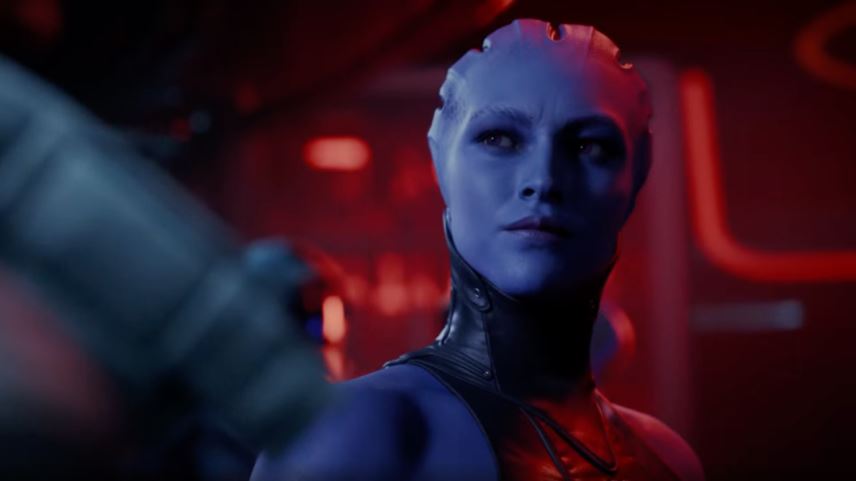
Liara T'Soni was also set to return. More than six centuries later, she would be an exceptionally powerful Asari matriarch and one of the characters connecting the new story to the original trilogy. BioWare had also reportedly found a way to preserve Shepard’s legacy regardless of which ending players chose in Mass Effect 3. The new story was not meant to simply declare one of the original choices the only correct ending.
The story was also meant to connect the Milky Way and Andromeda galaxies. This suggests BioWare wanted to gradually bring the two branches of the series together and use the large time gap to make events in Andromeda relevant to what was happening in the original galaxy.
Companions, Conflict, and Romance
Squadmates were once again meant to play an important role, with BioWare looking to bring back stronger relationships between the characters. Companions would not automatically get along and could come into open conflict, affecting both the atmosphere aboard the ship and the player’s decisions. Romantic relationships were also set to return, and according to Dantics, the studio did not want to tone them down or restrict them in any way.
Dantics says that what he saw of Mass Effect Universe looked very promising and that, in his view, BioWare was making Mass Effect primarily for fans of the series. The combination of a return to handcrafted missions, strong characters, and a new system offering greater freedom was meant to be one of the key differences from Andromeda.
Can the Game Still Be Saved?
However, Mass Effect Universe was canceled along with BioWare’s closure. An internal trailer also appeared online following the announcement, showing some of what the studio had been working on. The new information now gives a clearer picture of the direction the game was meant to take. IGN has also confirmed the credibility of Dantics’ details, so they are not merely unverified claims from a single community member.
Fans have not given up on the project entirely. A petition to save Mass Effect has passed 50,000 signatures, and a Canadian politician has even proposed that the government help former BioWare developers buy the studio and continue operating it as an independent company. For now, though, it is unclear what direction the sheikhs will take next. There is also talk of the possibility of selling the IP.













Comments