GTA VI - review
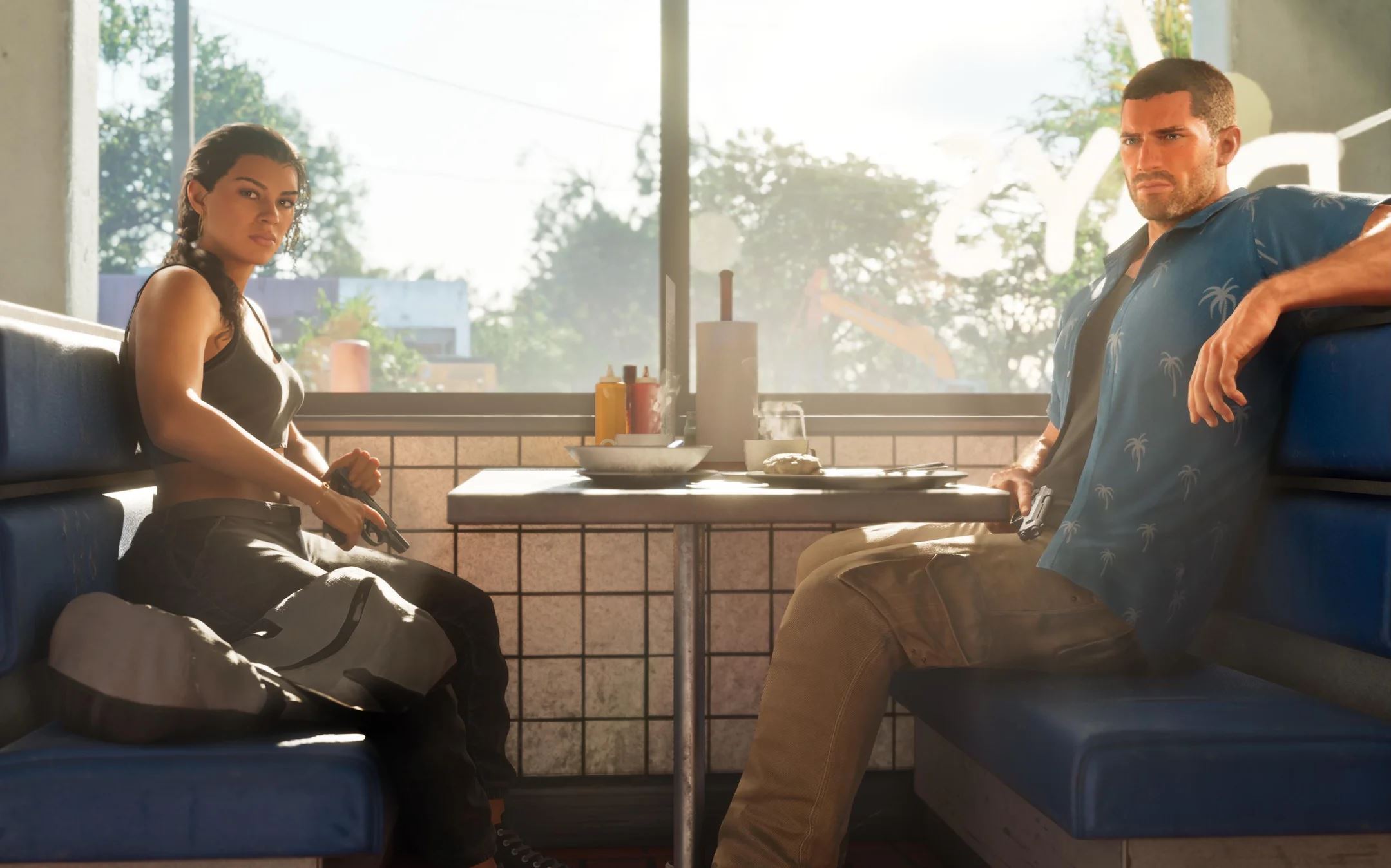
Was It Worth the 13-Year Wait?
After thirteen long years, Rockstar has finally delivered a new Grand Theft Auto. The wait has stretched across multiple console generations, an extraordinary amount of time for a series that once saw new installments arriving almost every year during the PlayStation 2 era. But the gaming industry has changed, player expectations have grown, and GTA itself has evolved into one of the biggest entertainment franchises in the world. With every new installment, the scope and ambition have increased, and the expectations surrounding GTA VI have reached an almost unprecedented level.
Looking back, the original 3D trilogy introduced three iconic locations that Rockstar has been revisiting ever since. In 2008, GTA IV took us back to Liberty City with a darker atmosphere, a more realistic approach, and groundbreaking technology for its time. Five years later, GTA V brought us to the sprawling landscape of southern San Andreas, introducing three playable protagonists, a larger open world, and more elaborate heists. Now, Rockstar returns to the third familiar destination, Vice City. But this time, the city is only part of something much bigger, with an entire state to explore and a new story built around two protagonists whose relationship is central to the experience.
Rockstar has created Leonida, a fictional state inspired by Florida, and filled it with an enormous, highly detailed world, countless activities, and an ambitious new crime story. The result is not a complete reinvention of the GTA formula. Its foundations remain familiar, but almost every aspect has been expanded, refined, or made more interactive. While the sheer scale of Leonida is impressive, its greatest achievement is how convincingly the world seems to exist independently of the player.
Jason and Lucia: Partners in Crime
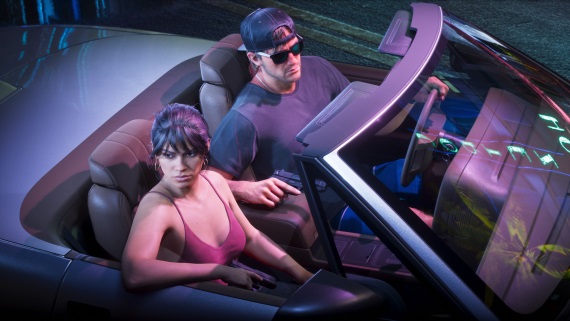
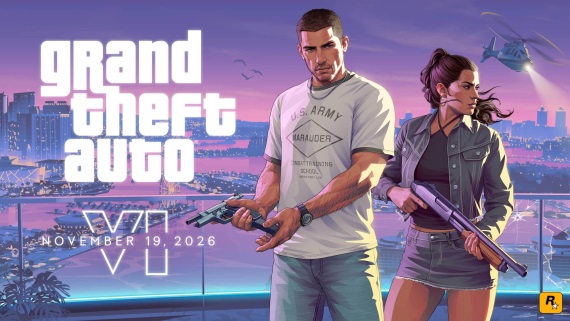
Following Niko Bellic in GTA IV and Michael, Franklin, and Trevor in GTA V, the new protagonists are Jason and Lucia, a couple whose relationship lies at the heart of the story. They already know each other before the game begins, but their paths have separated. Lucia has ended up in prison, and after being released on parole, she needs somewhere to stay. She reaches out to Jason, setting the pair on a journey that will take them deeper into Leonida's criminal underworld. Ironically, both characters want to leave their criminal lives behind and build a better future together. But achieving that dream requires money, and in Leonida, the fastest ways to make it are rarely legal.
Jason is a former soldier living in the Florida Keys, where he owns a modest home. This is where the couple begins their new life together and where the opening missions take place. Lucia still has community service obligations to fulfill, while Jason tries to keep money coming in. He helps friends, goes fishing, makes deliveries, and takes on various jobs. Naturally, things don't stay peaceful for long, and before they know it, the couple finds themselves fighting for survival and fleeing across Leonida. Their journey takes them through several different homes and environments. From the tropical islands, they move into the rural interior before eventually reaching Vice City. Their ambitions grow along the way, as do the dangers. What starts with petty theft and local disputes gradually escalates into major robberies, conflicts with organized gangs, and elaborate heists. Greater rewards inevitably attract more dangerous enemies.
One of GTA VI's most important additions is the relationship between its protagonists. Lucia is the first female lead of the modern 3D GTA era, and for the first time, the central playable duo is also a romantic couple. Their relationship develops throughout the campaign, and your actions can influence certain aspects of their connection. Affection, tension, jealousy, and occasional disagreements all play a part. Some situations are particularly entertaining, such as Jason getting involved in an adult film production or Lucia visiting a strip club. These moments can trigger reactions that make their relationship feel more believable and personal. Sometimes the results are funny, sometimes uncomfortable, and occasionally surprisingly intense. That combination of absurd humor, emotional moments, and brutal criminal action is exactly what you would expect from GTA. Here, however, the personal relationship gives the familiar crime story an additional dimension.
Familiar Missions, Bigger Ambitions
Despite the new setting and characters, the fundamental mission structure hasn't changed dramatically. You'll still spend plenty of time driving, shooting, chasing enemies, stealing vehicles, and completing jobs for an assortment of criminals and eccentric locals. Rockstar has nevertheless made these missions more elaborate, varied, and frequently more action-packed. Cinematic sequences, unexpected twists, and increasingly chaotic situations are everywhere. A seemingly straightforward assignment can quickly turn into a massive shootout or a desperate escape from the police, rival gangs, or even former allies. The campaign gradually increases the stakes, introducing more ambitious criminal operations as Jason and Lucia move up in the underworld.
Major heists remain the highlights, bringing together elaborate preparation, coordinated action, and spectacular set pieces. One welcome improvement is the greater freedom to engage in criminal activities outside the main storyline. You can rob stores, banks, and gang-controlled locations on your own initiative, creating opportunities to earn additional money without waiting for the next scripted mission. However, anyone expecting a completely new type of large-scale mission beyond the heists introduced in GTA V might be disappointed. Rockstar has expanded the existing formula considerably, but it hasn't replaced it with something fundamentally different. This is evolution rather than revolution, even if the scale and presentation have reached another level.
Leonida: A Virtual Florida
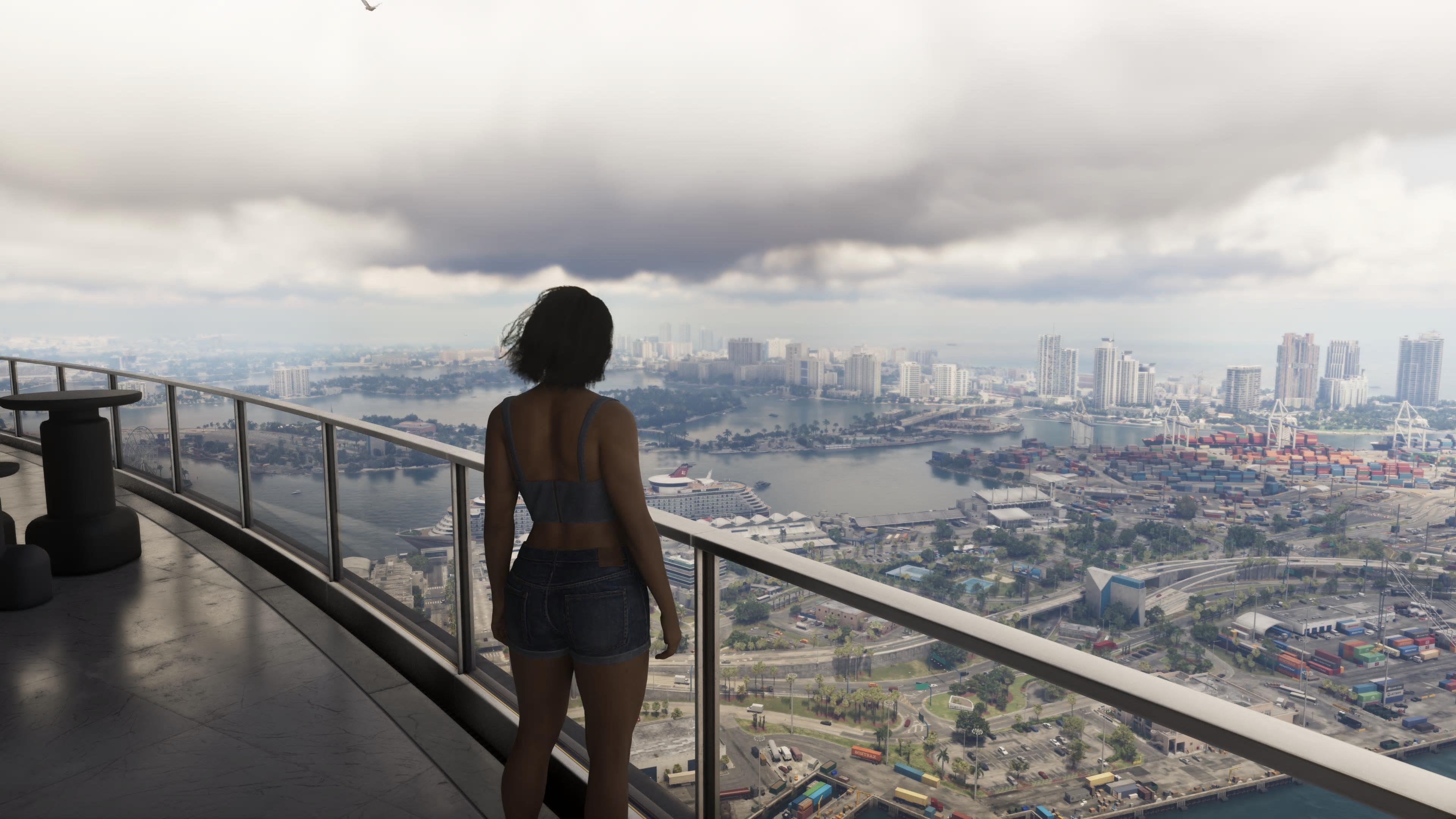
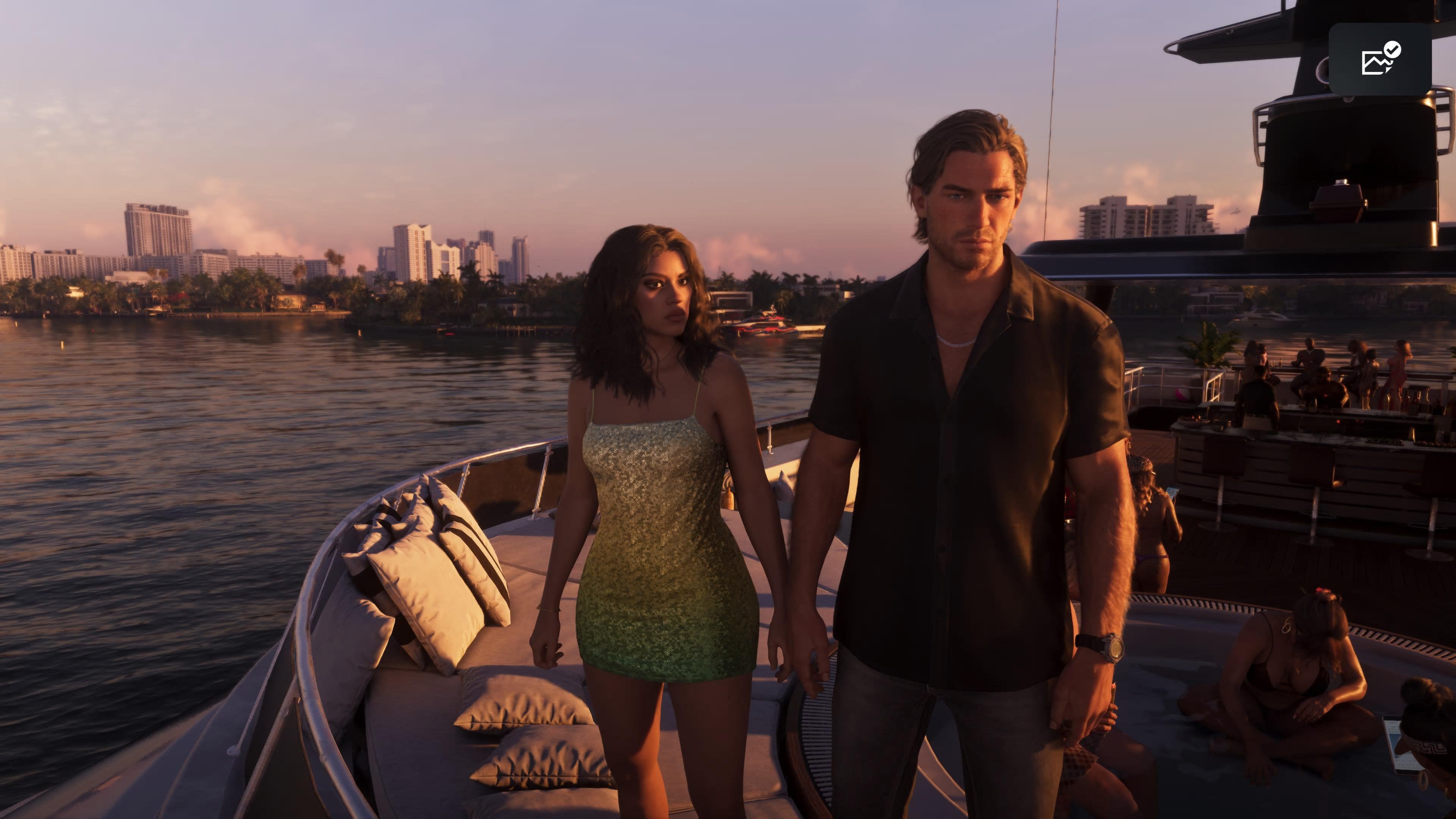
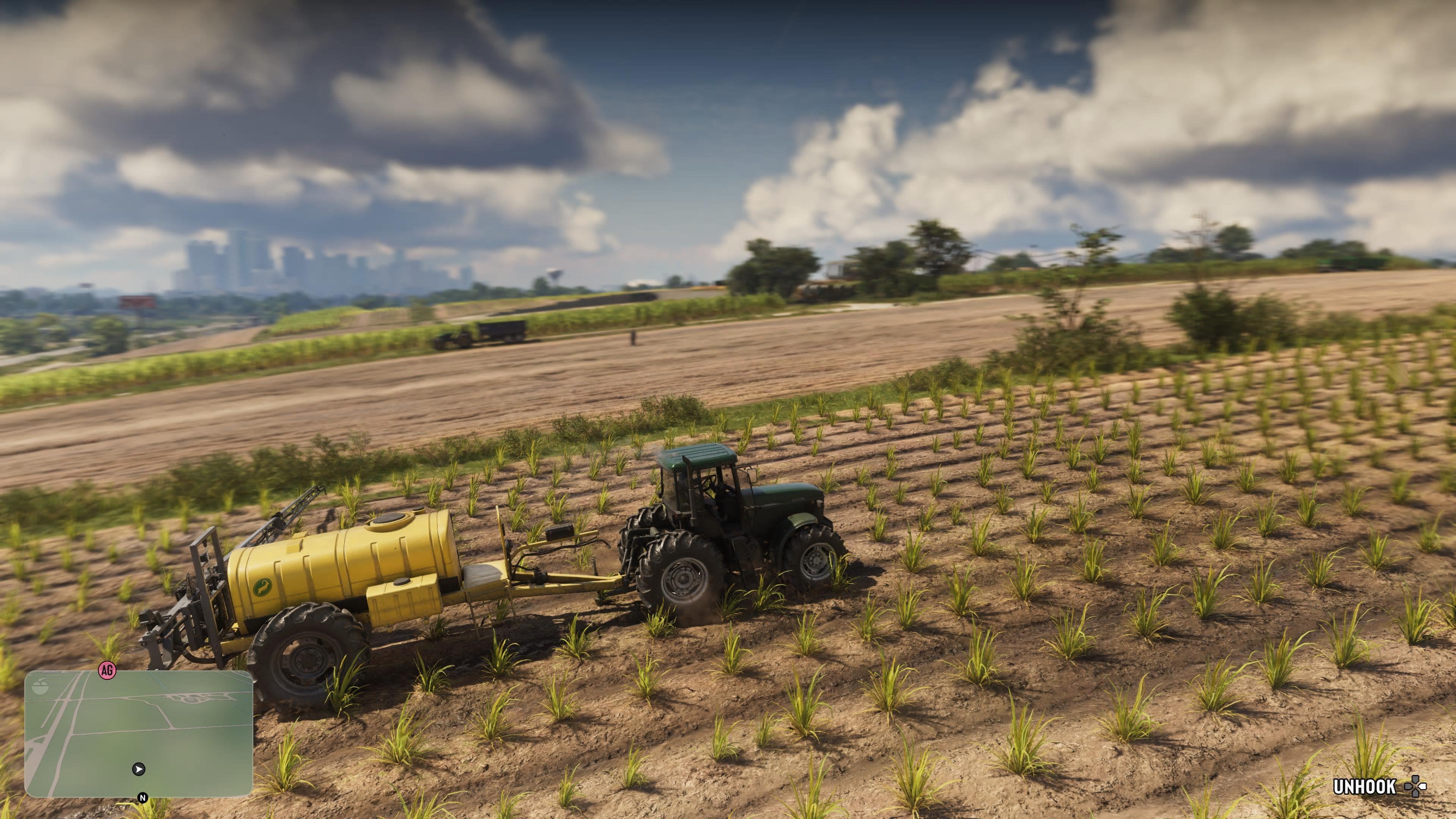
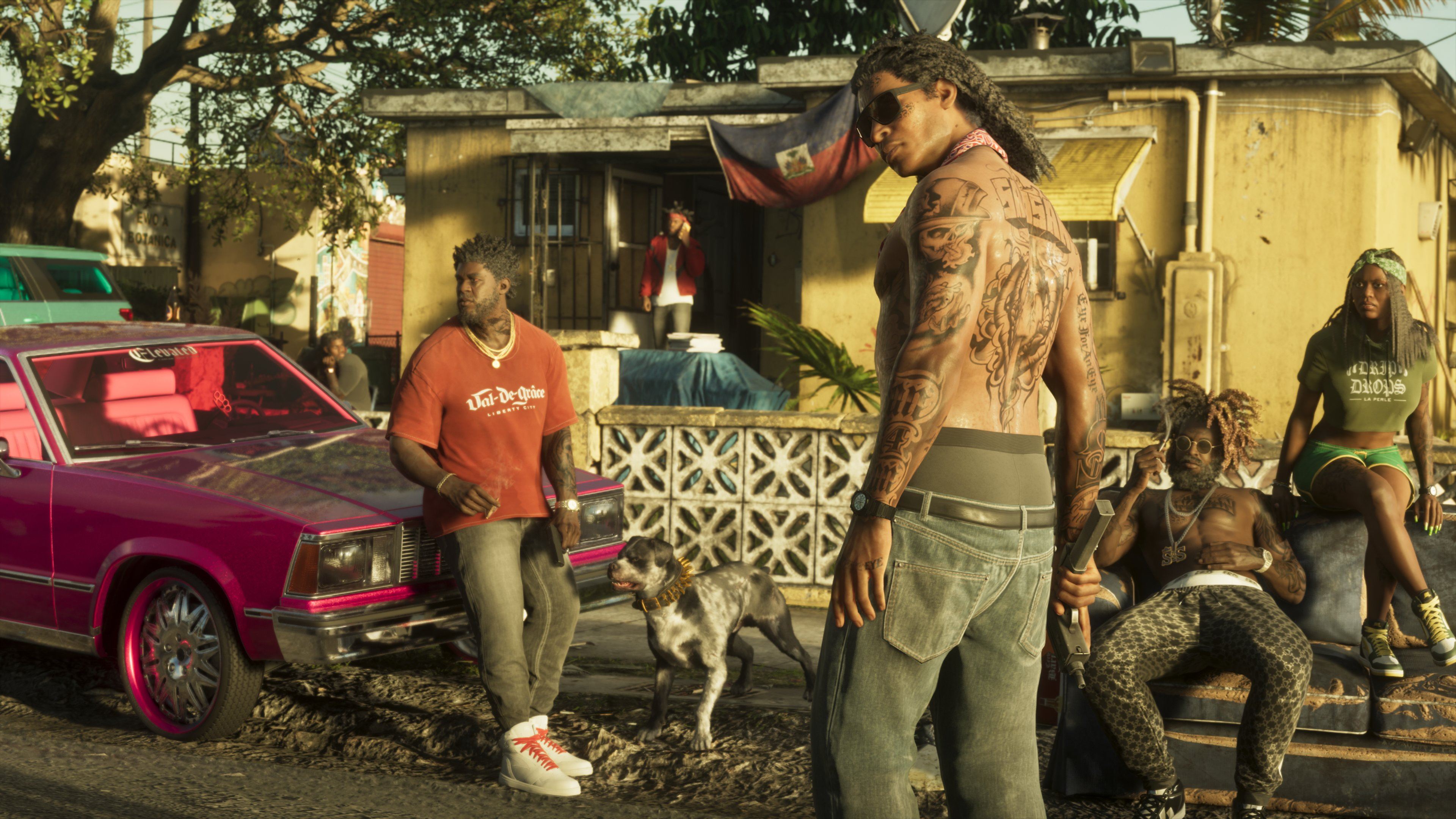
Leonida is enormous. Its map is approximately twice the size of San Andreas in GTA V, offering a diverse mixture of metropolitan areas, smaller towns, rural communities, forests, farms, tropical islands, and extensive swamplands. The overall layout isn't radically different from GTA V, but the atmosphere has changed substantially. Instead of dry deserts and towering mountains, Leonida offers the greener, wetter, and more tropical landscapes of Florida. Water plays a much larger role, dividing parts of Vice City, surrounding countless islands, and stretching into vast marshes and wetlands. Each region has its own identity, population, and culture. The busy streets of Vice City feel completely different from the coastal resorts, while the rural interior introduces another side of American life, populated by eccentric locals and communities with their own habits and attitudes.
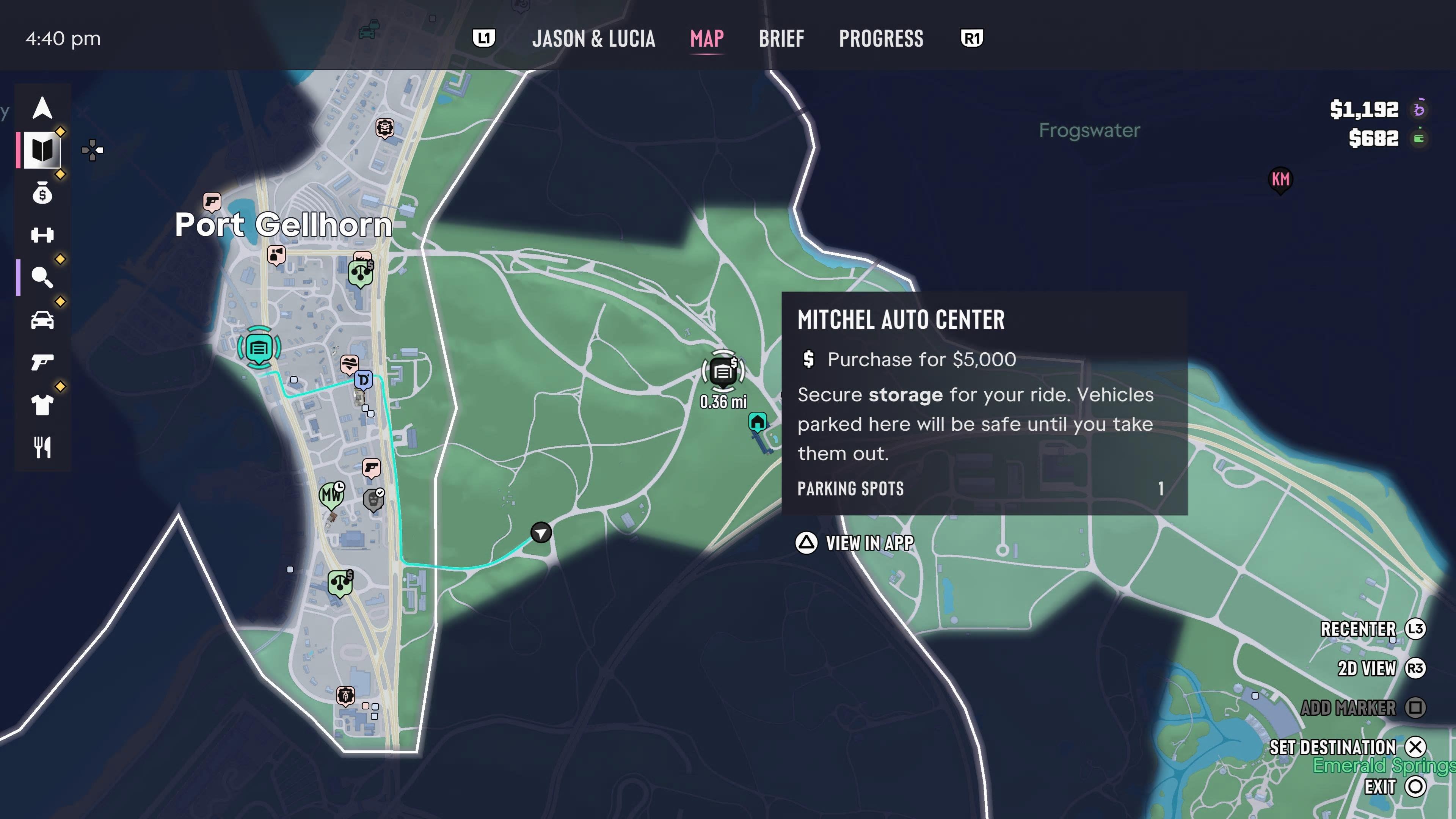
Navigating such an enormous world is made easier by a redesigned map that transitions into a three-dimensional view when zoomed in. It can even display building interiors, making exploration considerably more convenient. Traveling across Leonida also makes you appreciate just how large the map really is, especially when moving between distant locations. But while the size and visual diversity are impressive, what really separates Leonida from San Andreas is the sheer amount of activity happening within it. The streets are filled with pedestrians, traffic is denser, and people go about their own routines while reacting to events around them. More importantly, the world doesn't simply wait for you to trigger something. Its different systems interact independently, producing situations that feel spontaneous rather than scripted around the player.
You might encounter a traffic accident, a police operation, an argument between pedestrians, an animal attack, or even a plane falling from the sky. Sometimes these incidents overlap, creating unexpected chains of events that make the environment feel genuinely unpredictable. This is one of GTA VI's greatest advances over GTA V. You don't necessarily need a mission or a destination to find something interesting. Simply walking through Vice City or taking a drive into the countryside can provide entertainment for hours. The world offers a constant stream of small distractions, and many of them have nothing to do with the main storyline.
Rockstar's characteristic satire is also alive and well. Leonida is packed with ridiculous personalities, strange incidents, social media parodies, and exaggerated American stereotypes. Sexual jokes, nudity, and dark humor remain part of the experience, and the game is as willing as ever to make fun of practically everything. Exploration is further encouraged by countless hidden locations, Easter eggs, and mysteries. Strange phenomena, unexplained objects, references to local legends, and other secrets are scattered throughout the state. Even after dozens of hours, there is a constant sense that something unexpected might be waiting around the next corner. This is precisely what makes exploring Leonida so enjoyable, even when you have no particular objective in mind.

Driving, Flying, and Exploring
The enormous size of Leonida is reflected in the selection of vehicles available to players. Alongside regular cars, sports cars, motorcycles, and heavy machinery, you can operate boats, jet skis, hovercraft, helicopters, and aircraft. There's even a military base where you can get your hands on a fighter jet, assuming you survive the attempt. The driving model feels like a compromise between GTA IV and GTA V. Vehicles have more weight than before and respond more realistically to different surfaces, but they remain accessible and enjoyable to control. The result strikes a satisfying balance between realism and the arcade-style handling the series is known for.
Vehicle damage has also improved significantly. Body panels deform, metal crumples under impact, and severe collisions can damage engines or even leave vehicles without wheels. Cars are no longer just disposable objects that tolerate almost anything you throw at them. Another important addition is fuel consumption. Vehicles need to be refueled at gas stations, where you can also arrange repairs. Running out of fuel is rarely convenient, but it becomes particularly unpleasant when you're far out at sea in a boat or flying an aircraft. These additions introduce another layer of practical considerations to traveling. You need to think a little more about your vehicle, its condition, and how far it can take you, without turning GTA into an overly demanding driving simulator.
Stolen vehicles can now be registered as your own and stored in garages you've purchased. However, garages are the only properties available for purchase, so anyone hoping for an extensive real-estate system will have to adjust their expectations. It's a somewhat surprising limitation considering the game's enormous scope and the importance of money throughout the campaign. Nevertheless, the expanded vehicle management, improved damage simulation, and greater variety of transportation options make traveling across Leonida more engaging than in previous installments.
Shootouts, Weapons, and the Police
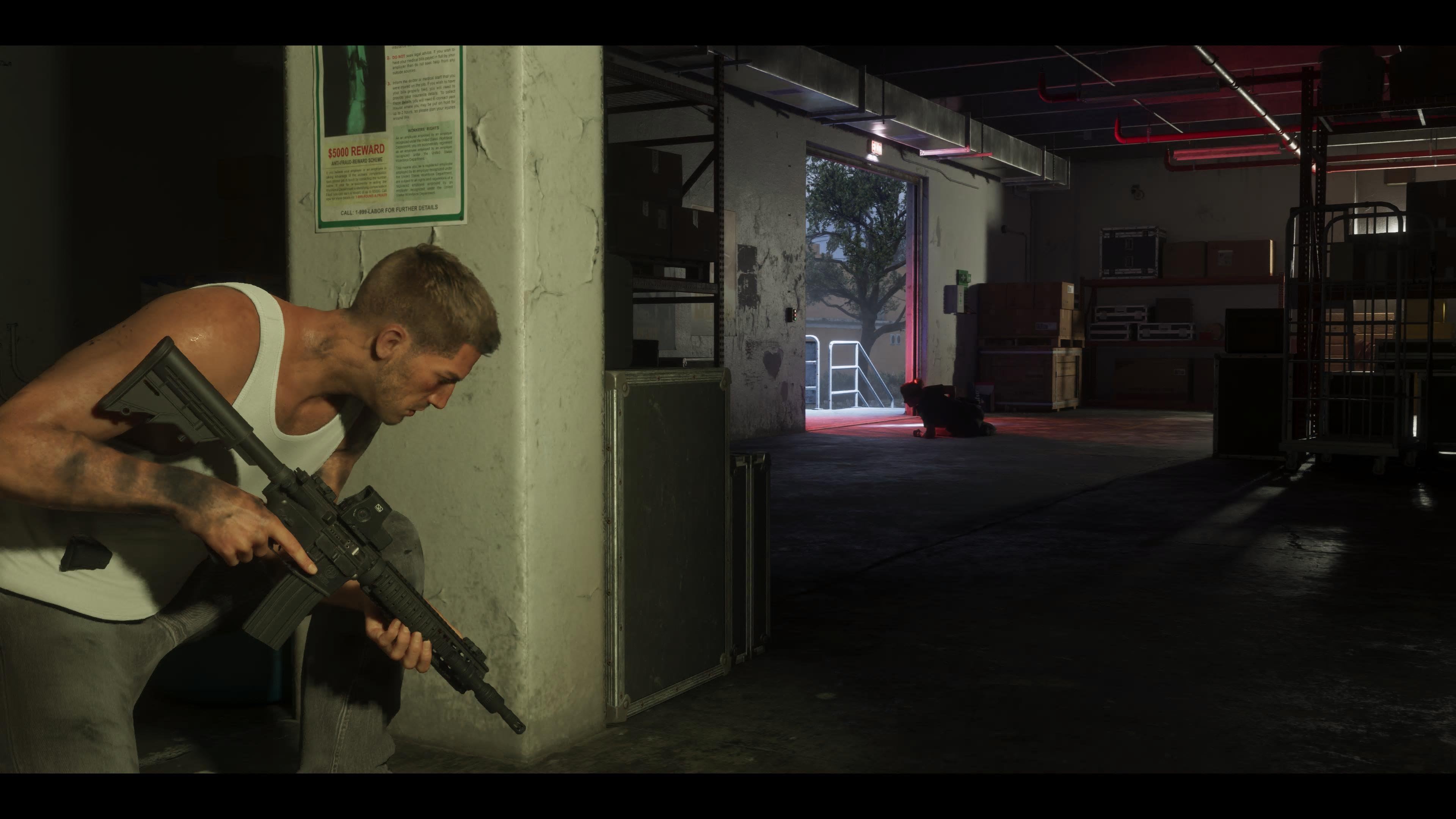
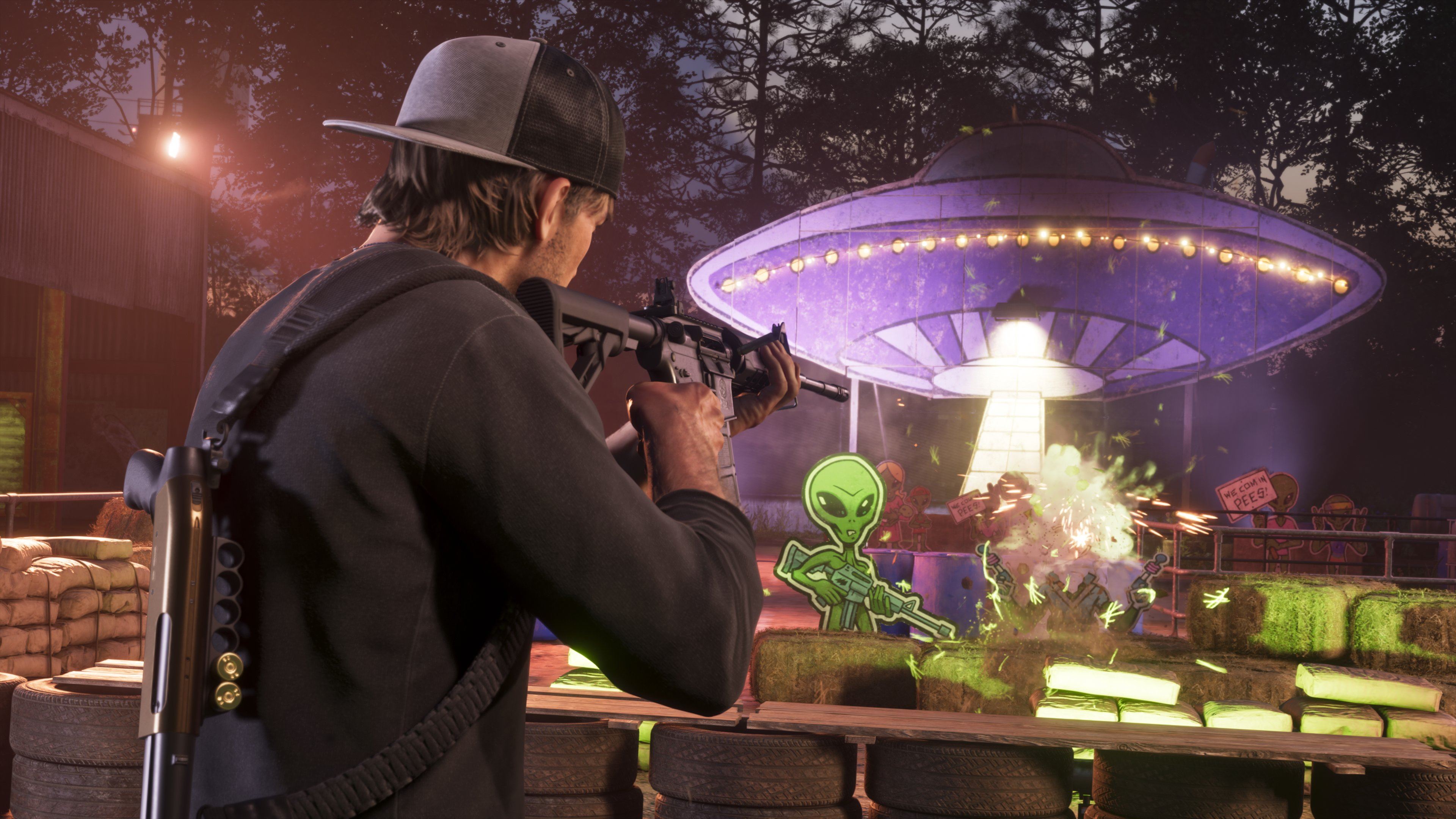
Combat remains a major part of the experience, and the foundations haven't changed much from GTA V. You still use cover, aim at enemies, and work your way through increasingly dangerous firefights. There are, however, several meaningful improvements. When aiming, you can switch directly to a first-person view through your weapon's sights. A slow-motion targeting mechanic also allows you to aim more precisely at individual body parts, which becomes especially useful against enemies wearing bulletproof vests. Shooting an armored opponent repeatedly in the torso isn't always the best strategy. Character physics have undergone a substantial improvement, with enemies reacting more convincingly to bullets, losing their balance, staggering, and colliding with the surrounding environment as they fall.
Gunfights consequently feel more physical and intense, with individual impacts carrying significantly greater weight. Considering Jason's military background, some of these action sequences almost resemble something out of Call of Duty. The improved animations, physical reactions, and presentation make even familiar shootouts feel more spectacular. The game also tracks a criminal profile for both protagonists. It takes into account whether you approach crimes professionally or resort to unnecessary violence and brutality, potentially influencing how certain parts of the story develop. Some situations can also be handled stealthily, without killing everyone in sight, giving players additional freedom in how they approach their objectives.
The arsenal is extensive, including pistols, shotguns, submachine guns, assault rifles, sniper rifles, rocket launchers, and various customized weapons. However, the way you carry them has changed considerably. Unlike previous GTA games, where your character could effectively carry an entire weapons store, GTA VI introduces more restrictive equipment management. You can carry two smaller and two larger weapons at a time, meaning you'll need to make decisions about what to bring. Larger weapons are also visibly carried by your character, and walking around with a rifle over your shoulder can attract unwanted attention. This adds an interesting tactical consideration, especially when entering public areas or preparing for more dangerous criminal activities.
Unfortunately, this increased realism isn't entirely consistent. Backpacks and equipment may appear on characters during robberies, only to disappear unexpectedly in other moments. Whether this is a technical oversight or a deliberate compromise isn't always clear. Smaller items can still materialize from nowhere when needed, breaking the illusion of a fully physical inventory. It's a shame, because the rest of the game works so hard to create a believable experience. Healing is similarly simplified, relying primarily on pills and adrenaline. These compromises are understandable from a gameplay perspective, but they stand out more noticeably in a world that otherwise pays such extraordinary attention to detail.
The police system is another area that has received considerable attention. Witnesses can report crimes and provide descriptions of suspects, including their clothing, vehicles, and weapons. Simply breaking the officers' line of sight isn't always enough to escape identification. Changing cars, swapping clothes, or putting on a mask can help you avoid detection, and the police respond more intelligently to your actions. There is a greater emphasis on how you commit crimes and leave the scene, which makes criminal activities feel more involved. Still, the system has its limitations. Despite the more elaborate pursuit mechanics, escaping the police can ultimately remain a matter of getting outside the designated search area. It's a noticeable improvement, but not the complete transformation of police behavior some players might have expected.
More Interaction, Less Button Pressing
Rockstar has also expanded how players interact with everyday objects and environments. Activities that previously required a single button press now sometimes involve more elaborate physical interactions. Picking locks, stealing vehicles, and manipulating certain objects may require precise analog-stick movements, combinations of shoulder buttons, or carefully controlled pressure. Similar mechanics appear in activities such as cutting materials, hammering boards, and painting. These are effectively small minigames, but they make ordinary tasks feel more hands-on. Instead of simply watching an animation play out, you participate in the process. Individually, none of these interactions is revolutionary, but together they contribute to the broader feeling that GTA VI is a much more interactive game than its predecessor.
This attention to interaction extends beyond criminal activities. Even relatively mundane tasks can require direct participation, making the environment feel less like a collection of static objects and more like a place where things can actually be done. Not every activity is equally engaging, and some mechanics remain deliberately simple, but Rockstar has clearly tried to reduce the distance between watching something happen and making it happen yourself. It's another example of how countless smaller improvements gradually transform the overall experience.
Two Characters, One Shared Life
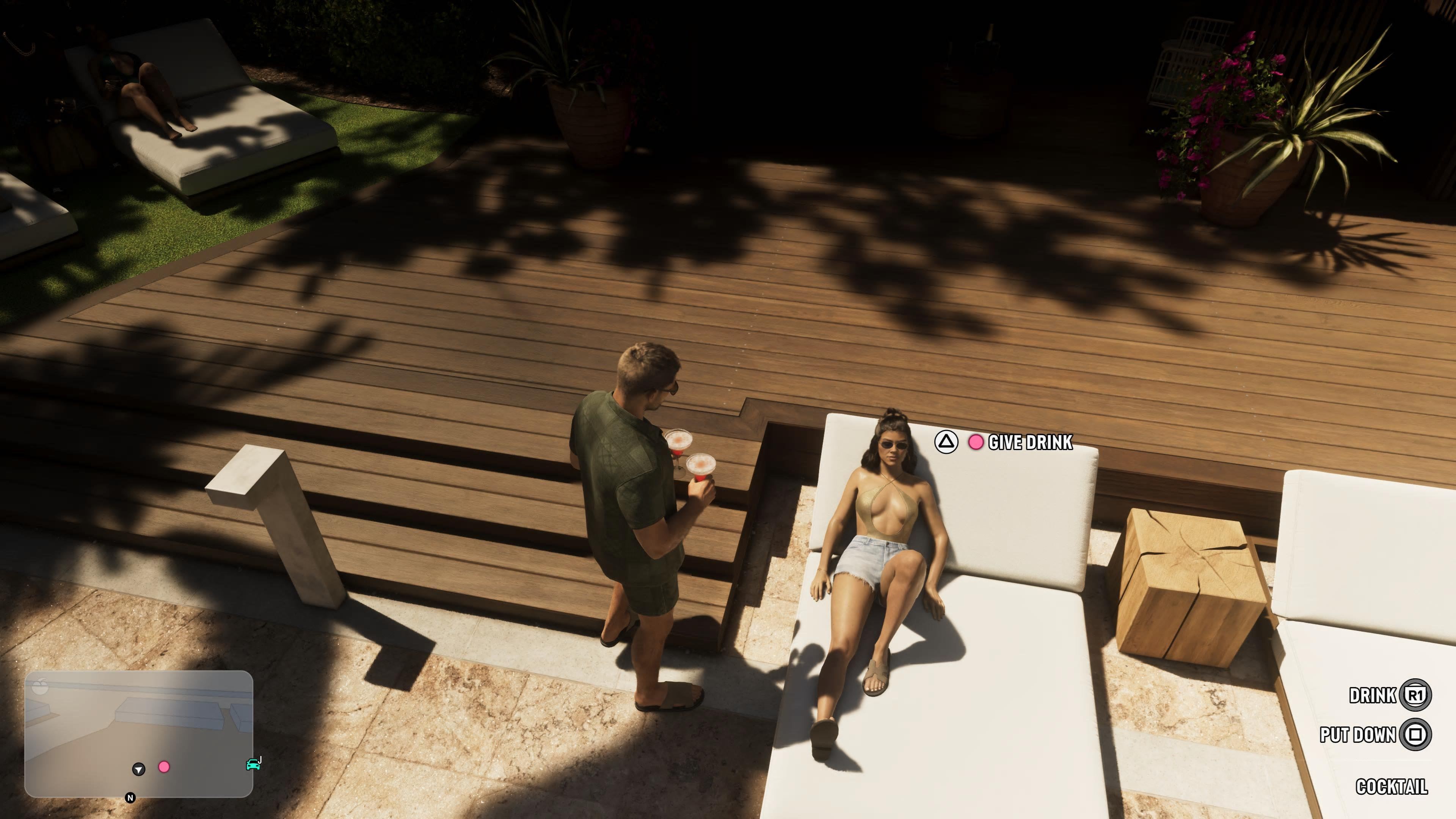
Switching between protagonists returns from GTA V, but this time the system is more deeply integrated into the experience. Jason and Lucia each have their own missions and activities. Some assignments allow you to decide which character will complete them, while others let you switch between the two during the action, either manually or automatically depending on the situation. Their connection goes beyond missions, too. The couple can spend time together exploring Leonida, going on trips, and participating in everyday activities. You can walk hand in hand, hug, kiss, and strengthen their relationship through shared experiences. These interactions contribute to the feeling that the protagonists have a life together beyond their criminal ambitions.
They can also spend intimate time together, although Rockstar generally keeps these scenes brief, often cutting away rather than showing much. And in a rather amusing reflection of modern relationships, even when the couple ends up in bed together, they sometimes seem more interested in their phones than in each other. These details may sound minor compared with the massive scale of the open world, but they give Jason and Lucia an identity that goes beyond their criminal activities. Unlike GTA V's three protagonists, whose relationships were often defined by conflict, the central connection here offers something more personal and gives the two-protagonist system a stronger narrative purpose.
Fitness, Customization, and Everyday Life
Another returning feature is the ability to develop your characters physically, something fans of GTA: San Andreas will remember. Both protagonists can work out, eat, sleep, recover their health, and gradually change their physical appearance. The game tracks several statistics, including muscle mass, stamina, body fat, and calorie intake. Fitness plays a surprisingly significant role, even appearing within the main campaign. However, the game doesn't force you to constantly manage every aspect of your characters' daily routines. Better physical condition can provide advantages, but you can still focus on the activities you enjoy. Customization is also extensive, with a wide selection of clothing, hairstyles, tattoos, and piercings, giving you considerable freedom to define how Jason and Lucia look as their story progresses.
Smartphones are another central part of everyday life. You can use them to communicate, browse social media, read the news, check the weather, order transportation, and access various services. Television programs, playable console games, and numerous radio stations provide further entertainment. Unlike earlier GTA games, you no longer need to remain inside a vehicle to enjoy the soundtrack. By purchasing headphones from a store, you can listen to music while walking around the world. These everyday systems give Leonida an additional sense of authenticity. Not everything revolves around crime, and sometimes it's enjoyable simply to live in the world Rockstar has created, whether you're visiting a nightclub, relaxing at home, or exploring a neighborhood without any particular objective.
An Enormous Selection of Activities
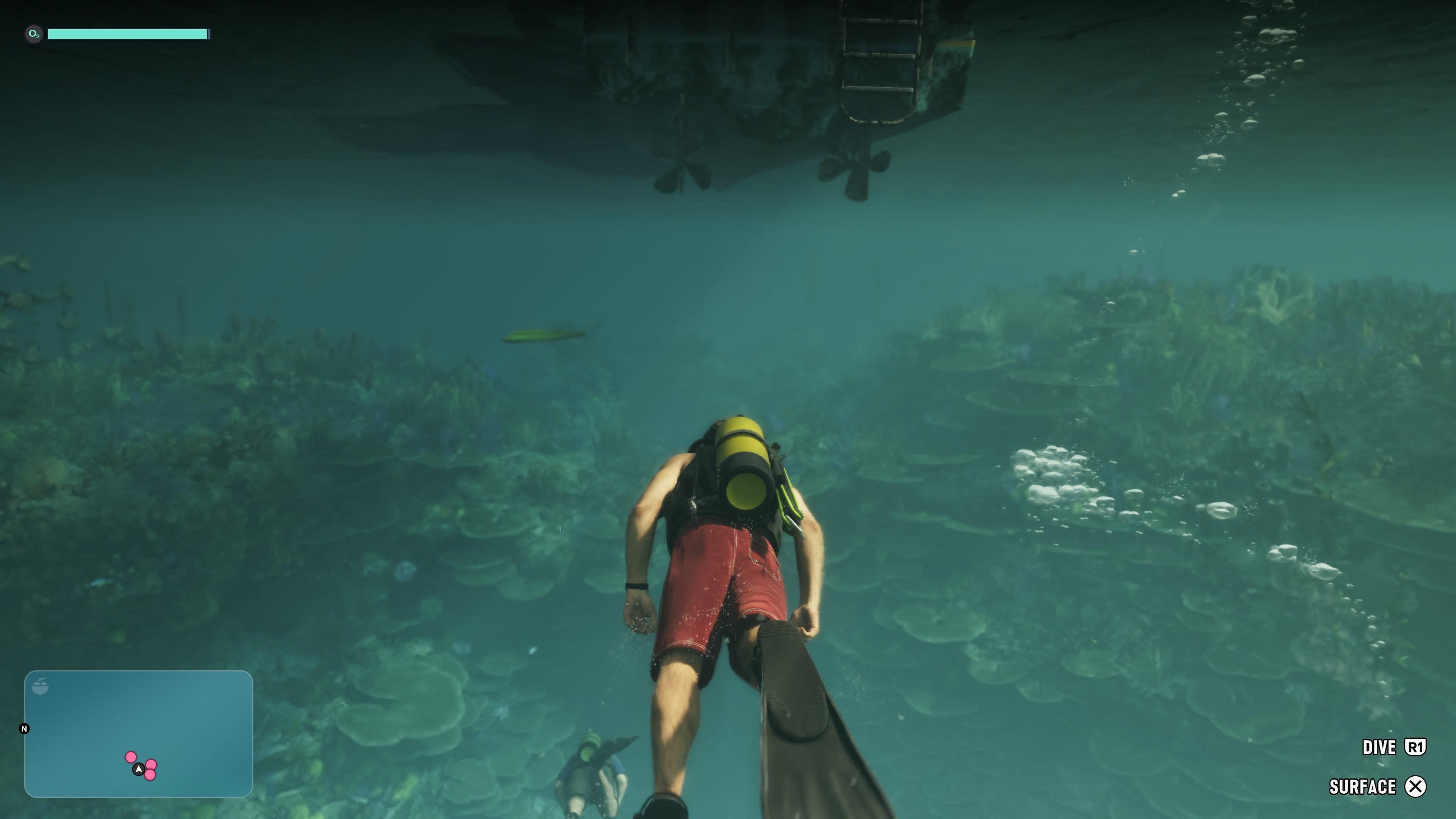
If you want a break from the main story, GTA VI offers an almost overwhelming selection of things to do. Golf and minigolf return, alongside basketball, billiards, fishing, hunting, and scuba diving for underwater treasures. You can participate in road races, off-road events, shooting challenges, stunt jumps, aerial competitions, and BASE jumping. Side missions introduce various characters and stories, while activities connected to nine local gangs allow you to interfere with their criminal operations. Exploring nature provides an entirely different experience. You can observe and document dozens of animal species, track wildlife, and discover notable locations scattered throughout Leonida. There are also collectible items, hidden areas, and even cheats that can be unlocked by meeting specific conditions.
Nearly every region contains activities capable of drawing you away from the main campaign. Unlike a conventional open-world checklist, many of the most entertaining moments happen when you're not actively trying to complete anything. You might set out to complete a mission and end up spending an hour participating in an entirely different activity. The variety also helps distinguish the regions of Leonida from one another, as coastal areas, rural communities, and urban neighborhoods naturally offer different opportunities. Rockstar has clearly invested considerable effort into making the world worth exploring long after the main storyline ends.
Money also plays a more substantial role than before. Rockstar has introduced a more elaborate financial system, including the possibility of losing cash when you die. Depositing your earnings in a bank is therefore a sensible precaution. A banking app on your smartphone allows you to manage savings accounts and transfer money to other characters. Given how central money is to Jason and Lucia's ambitions, these mechanics fit naturally into the overall experience. They also provide additional reasons to engage in optional activities, beyond simply earning completion percentages or unlocking collectibles.
How Long Does GTA VI Take to Complete?
I completed the main story in approximately 52 hours, including several side missions and a fair amount of exploration. I also experienced two different variations of the ending. There are additional possible outcomes, influenced by decisions made throughout the game and the amount of money you've earned. The reasons become clearer as the story progresses, but I won't spoil them here. What I can say is that GTA VI delivers a slow-burning crime story that gradually builds toward increasingly serious consequences. Its five chapters introduce new themes, raise the stakes, and push Jason and Lucia into progressively more dangerous situations. The pacing allows the characters and their relationship to develop naturally while the scale of their criminal activities continues to expand.
By the time I finished the campaign, my overall completion percentage was just 58%. That's a good indication of how much additional content Rockstar has packed into the game. Anyone determined to complete every side mission, explore all the hidden locations, document the wildlife, and collect everything should expect dozens of additional hours, potentially another hundred or more. It's also worth mentioning that GTA VI doesn't currently include multiplayer. GTA Online is planned to arrive later, so the initial experience is focused entirely on the single-player campaign. Even without multiplayer, however, there is an extraordinary amount of content to explore.
Technical Excellence on an Enormous Scale
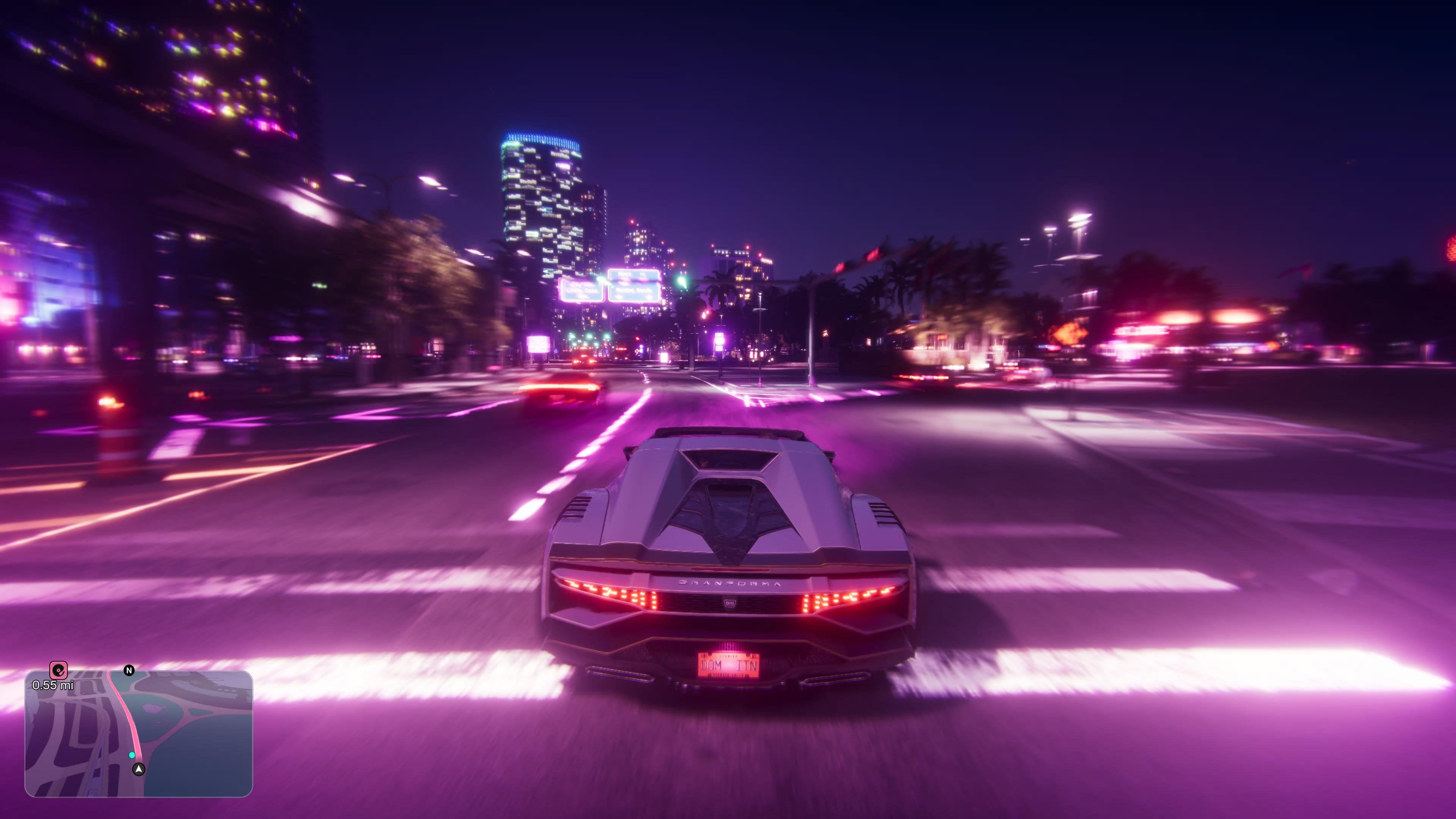
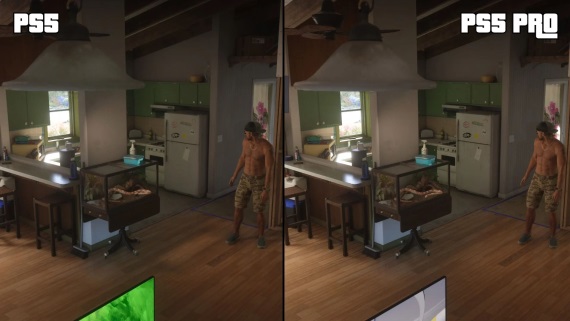
The technical presentation is unquestionably one of GTA VI's greatest strengths. Rockstar has built upon the experience gained from GTA V and Red Dead Redemption 2, taking its technology to an entirely new level. Leonida looks spectacular, whether you're exploring its streets at night, flying high above the coastline, or traveling through the countryside during a tropical storm. The sheer density of detail is remarkable. Streets are packed with traffic and pedestrians, buildings feature intricate architecture, and natural environments display an extraordinary amount of vegetation and environmental variety. Ray-traced reflections and lighting contribute greatly to the presentation, while PS5 Pro also features ray-traced shadows. Water is particularly impressive, which is important given how much of Leonida consists of coastlines, rivers, canals, and wetlands.
The dynamic weather system adds another layer of realism. Fog, heavy rainfall, tropical storms, and lightning can dramatically transform the atmosphere. Lightning strikes can even ignite parts of the environment, introducing additional unpredictability during storms. Some of the most striking moments occur when several of these systems come together. Driving through a rain-soaked city at night, with reflections covering the streets and dense traffic moving around you, demonstrates just how far Rockstar has pushed its technology. Almost everything looks exceptionally detailed, from the smallest environmental objects to the enormous urban landscapes. The only visual effect I found somewhat underwhelming was the larger explosions, which didn't always impress me as much as the rest of the presentation.
Of course, achieving this level of visual fidelity on current consoles comes at a cost. GTA VI targets 30 frames per second across its console versions. Given the complexity of the simulation, higher frame rates would likely run into CPU limitations, even on more powerful hardware. If you're accustomed to playing games at 60 fps or above 100 fps, the transition can take some getting used to. The lower frame rate is particularly noticeable during fast camera movements, although the visual spectacle helps compensate for the reduced smoothness. It's a compromise that some players will accept more easily than others, especially considering how demanding the game's enormous and highly interactive world appears to be.
Animation and Physics Reach Another Level
Beyond graphics, one of the biggest technological advances is the animation system. Characters move more naturally, respond more convincingly to their surroundings, and transition between animations more smoothly. This is particularly apparent during action sequences, where movement, combat, and environmental interactions blend together. Rockstar has also improved traversal mechanics. Climbing over fences, overcoming obstacles, and chaining together jumps feels more fluid, with characters maintaining their momentum more effectively. To populate the world, Rockstar created almost a thousand animation sets for everyday NPC behavior, along with hundreds of additional unique animated events. The visual quality of ordinary pedestrians has also improved considerably. Their faces, clothing, and overall level of detail are much closer to the main characters than in previous GTA games.
Hair simulation deserves particular attention. Hairstyles move dynamically in response to wind and character movement, not only for Jason and Lucia but also for ordinary inhabitants of Leonida. Environmental interaction has received similar care. Characters sink into mud, leave footprints, and accumulate dirt on their clothes. Fabric gradually becomes wet when entering water, while skin can appear damp from rain, swimming, or sweat. These details aren't simply visual decorations. They help connect the characters to their surroundings, making their movement through different environments feel more convincing. Whether you're walking through a muddy swamp or emerging from the ocean, the world visibly affects your character.
Vehicle physics are equally impressive. The advanced soft-body deformation system allows bodywork to bend and crumple according to the force and direction of impacts. Rockstar has confirmed that it completely rewrote the simulation systems for all vehicle types in GTA VI. This extends beyond cars to aircraft, where aerodynamic surfaces, propellers, and engines are simulated individually. Weather conditions, turbulence, and damage to individual components can all affect how aircraft behave. These systems create a more convincing sense that vehicles are physical objects rather than simply models moving through the world. It's the interaction between so many individual technologies that makes the experience remarkable. No single feature is responsible for the overall effect. Instead, countless small improvements work together to create a world that feels unusually cohesive.
The cutscenes are another highlight, combining detailed character models, impressive facial animation, and cinematic camera work. Rockstar's storytelling remains strongly influenced by film, and the presentation often reaches a level of quality rarely seen in open-world games. The seamless integration of scripted sequences and gameplay also helps maintain the sense of continuity throughout the experience. Together with the improved physics and animation systems, these elements make GTA VI feel like a genuine technological advancement rather than simply a more detailed version of its predecessor.
Controls and Sound Design
Rockstar has made some adjustments to the controller layout, introducing a new control scheme that I personally prefer over the previous one. Players accustomed to the traditional GTA controls can still switch back to the older configuration. I played the PS5 version, where the DualSense controller adds another dimension through haptic feedback. Driving, shooting, and various interactions are accompanied by physical sensations that help bring the action closer to the player. The effect is particularly impressive in nightclubs, where the bass from the music can be felt through the controller itself. Phone ringing and other effects also play through the controller's built-in speaker. I haven't tested how the equivalent experience is handled on XBOX, but the DualSense implementation on PS5 is excellent.
Sound design is equally impressive. The game combines city ambience, pedestrian conversations, natural environments, vehicle engines, gunfire, and an extensive collection of licensed music into a rich audio experience. Voice acting is consistently strong, not only during the main story but also throughout the enormous number of conversations taking place around the player. Rockstar has developed a new spatial voice propagation system that allows conversations to blend more naturally into the surrounding environment. Voices sound different depending on where characters are located and how sound travels through the space, creating a more convincing acoustic atmosphere in both crowded urban areas and quieter environments.
The developers also recorded different types of real speakers and acoustic environments to reproduce how music should sound in various situations. A song playing from a car stereo sounds different from the same track coming through a small portable speaker or a massive nightclub sound system. The attention to detail extends even to seemingly insignificant environmental sounds. For example, old refrigerators in neglected stores produce different noises from modern equipment in expensive retail locations. These are the kinds of details most players may never consciously notice, but together they contribute enormously to the sense of being inside a living world. Just like the graphics and physics, the sound design benefits from Rockstar's determination to make every individual element feel connected to its surroundings.

Verdict: Was the Wait Worth It?
After thirteen years, Rockstar has delivered another remarkable open-world game that pushes the boundaries of what the genre can achieve. GTA VI significantly improves almost everything that made its predecessors successful. Leonida is bigger, more detailed, more populated, and considerably more interactive than San Andreas. Its inhabitants feel more convincing, the world generates unexpected situations, and the sheer variety of activities is extraordinary. The improved physics, animations, vehicle simulation, and environmental interactions raise the level of realism substantially. Numerous smaller mechanics combine into an experience that few other open-world games can currently match. Jason and Lucia are another major strength. Their relationship adds a more personal dimension to the traditional GTA crime story, creating moments that go beyond robberies, chases, and spectacular shootouts.
That doesn't mean GTA VI is without flaws. The fundamental mission design remains familiar, and despite the enormous improvements in presentation and interactivity, the overall gameplay still feels like an evolution of GTA V. There is no entirely new category of major missions to surpass the established heist formula. Some inconsistencies also stand out in a world that otherwise strives for remarkable realism. Equipment occasionally disappears during animations, inventory management still relies on a few convenient shortcuts, and the enhanced police system can sometimes feel less sophisticated than its underlying mechanics suggest. The 30 fps limitation may also disappoint players accustomed to higher frame rates, while the restricted property ownership system leaves room for future expansion.
But these shortcomings do little to diminish the overall achievement. GTA VI may not revolutionize the underlying concept of Grand Theft Auto, but it represents an enormous leap forward in its execution. The combination of technological ambition, extraordinary attention to detail, diverse gameplay systems, and a genuinely convincing open world makes Leonida one of the most impressive virtual environments ever created. Rockstar has once again demonstrated why Grand Theft Auto occupies such a unique position among open-world games. And after thirteen years of waiting, it's difficult not to be impressed by how much the series has evolved.
Verdict
10.0/10Pros
- Huge, beautifully crafted open world
-Likeable protagonists and an engaging story
-Excellent atmosphere and varied missions
- Intense shootouts and improved driving physics
- Impressive graphics, physics, and animations
-Likeable protagonists and an engaging story
-Excellent atmosphere and varied missions
- Intense shootouts and improved driving physics
- Impressive graphics, physics, and animations
Cons
- 30 fps
About this game

Latest news
-
 GTA VI Technical Analysis: Uses FSR 4 on Xbox Series S, Runs More Stably on PS5 Pro
-
 GTA VI Is Set to Send Millions of Students and Workers on Unplanned Leave
-
 GTA VI Preloads Are Now Available; Rockstar Confirms 30 FPS and PS5 Pro Enhancements
-
 Grand Theft Auto VI highlights its PS5 features in a new trailer
-
 GTA VI Preloads Are Now Available; Rockstar Confirms 30 FPS and PS5 Pro Enhancements
Popular