Fleeing GTA 6: How One Game Reshaped the Entire Industry’s Fall Release Calendar
Grand Theft Auto VI won’t launch until November, but its impact on the release calendar was already being felt months earlier.



There’s an unwritten rule in the games business: if you want to make money from a big game, fall is the ideal time to release it. September and October bring a strong wave of new releases, and November traditionally peaks with holiday shopping. But 2026 has significantly disrupted that pattern. The reason is one game with the potential to overshadow practically everything else: Grand Theft Auto VI from Rockstar Games, launching on November 19 for PlayStation 5 and Xbox Series X/S.
Of course, GTA 6 hasn’t moved every single game on the calendar. For many titles, we don’t know the real reason behind their release dates, and some were affected by completely different circumstances. Even so, it’s hard to miss a common pattern when looking at the fall 2026 calendar. Big games are trying to get to market before November, while others are disappearing from the end of the year altogether.
The first big wave arrived in September. The Blood of Dawnwalker launched on September 3, followed by Onimusha: Way of the Sword on September 4 and Halloween: The Game on September 8.
Onimusha is an interesting example. Capcom originally planned to release it on September 25, but moved it up to September 4 in July. Officially, it was simply an earlier release, so it would be a stretch to claim GTA 6 was the reason. The result is the same from a calendar perspective, though: the game is out nearly three weeks earlier and has much more time to attract players.
And September is far from over. Marvel's Wolverine launches on September 15, followed by Silent Hill: Townfall and CONTROL Resonant. EA Sports FC 27, Minecraft Dungeons II, and The Witcher 3: Wild Hunt — Remastered are still due later in the month. And in between, dozens of smaller games are also fighting for their place in the spotlight.
There’s simply a lot coming out. That’s exactly why, from a business perspective, it makes sense to be on the market before November 19 arrives.
If September is crowded, October looks like the last big opportunity to reach players before GTA 6.
Ace Combat 8 takes off on October 2. Gears of War: E-Day arrives on October 6, giving Microsoft more than a month to get its big fall game on the market before Grand Theft Auto. Star Wars: Galactic Racer also launches that day. More major titles will join them throughout October, including Clive Barker's Hellraiser: Revival. Next month will also bring Dragon's Dogma 2: Dark Arisen, Total War: Shogun 2 - Complete Edition, Valor Mortis, Castlevania: Belmont's Curse, Stupid Never Dies, Remothered: Red Nun’s Legacy, Phantom Blade Zero, and plenty more. Call of Duty is also back, although the series has often targeted November. This year, however, Modern Warfare 4 arrives on October 23.
Now for the most interesting part. November 2026 isn’t completely empty. On the contrary, several games are still launching that month. But looking at their target audiences, it’s fairly clear why they may not be too worried about GTA 6.
World of Warcraft: Forever arrives on November 4. It’s a new permanent home for WoW players, and its audience doesn’t overlap much with GTA players. If someone has spent the past twenty years in Azeroth, Rockstar could release the biggest game in history on November 19 and that doesn’t necessarily mean they’ll stop playing World of Warcraft.
The next day, November 5, The Legend of Zelda: Ocarina of Time arrives on Switch 2. Nintendo clearly has no reason to play by other publishers’ rules. Zelda has its own platform and audience, and Nintendo doesn’t need to base its decisions on whether PlayStation and Xbox players will be spending money on GTA 6. If you have a Switch 2 and want to play Zelda, Rockstar isn’t going to cancel that purchase.
November will also bring games like K-Pop Rising: Dream to Shine and Barbie Rewind. They’re aimed at entirely different segments and will compete far less with GTA 6 for money and attention. Metaphor: ReFantazio and Pikmin 4 will also get Switch 2 versions in November.
And then comes November 19 and Grand Theft Auto VI.
What happens next is interesting.
The release of GTA 6 doesn’t mean all the servers will shut down on November 19 and nobody else will be allowed to release a game. Smaller projects are still on the calendar after that date. But when it comes to major, high-profile games, the situation is striking.
After GTA 6, no other major game that could directly compete for the attention of mainstream players is due until the beginning of December. November after the 19th simply feels as if someone cleared out the calendar.
Then comes December 1 and Hela: of Mice & Magic. Two days later, the real December avalanche begins. Delayed games start coming out, and in some cases it’s clear they wanted to avoid GTA while also steering clear of September and October’s release crunch.
The most interesting case is Rayman Legends Retold. Ubisoft originally scheduled it for October 1, right at the start of the biggest fall release rush. But on September 14, it announced that the game wouldn’t arrive until December 3.
What’s especially notable is that the game had already gone gold. Ubisoft wasn’t waiting for development to finish, yet still decided to give the team more time to polish the details. The company never officially said GTA 6 was the reason.
But the new date speaks for itself. Rayman skipped all of October, all of November, and the release of GTA 6 itself, arriving in December just before Christmas.
It’s one of the best examples of how unusual this year’s calendar looks. It’s also a reminder that we can’t automatically treat every delay as “fleeing GTA.” It could simply be a business decision, an attempt to find a better release window, or extra time to polish the game.
Warhammer 40,000: Dawn of War IV and Dragon Quest Monsters: The Withered World also launch that day. The next day, Monster Hunter Wilds joins them with its Switch 2 version.
December 10 is even bigger. Attack on Titan 3, Professor Layton and the New World of Steam, and Stage Tour all arrive that day. And on December 11, Path of Exile 2 joins them with its major 1.0 version.
So if anyone moved a game from October to December hoping for some breathing room, they might want to check the calendar again. December is considered a very slow month in the games business, which is why major new games traditionally don’t launch then. But now there’s no other option. December 2026 looks like the place everyone is trying to flee to in order to avoid GTA 6. And they’ll all end up running into each other there.
Some games don’t even want to risk that competition. SAW: Genesis from Bloober Team was originally planned for PC Early Access in the fourth quarter of 2026. The studio has now announced that the game won’t arrive until the first quarter of 2027.
Bloober hasn’t said GTA 6 is the reason, either. The studio previously held a closed alpha test with more than 4,500 players and is continuing development based on their feedback. So the move to 2027 could be a completely legitimate development decision.
And then there’s Fable. Microsoft originally planned it for 2026, but eventually moved it to February 23, 2027. The official reason was to better space out major games and give Fable room to get the attention Microsoft believes it deserves. The company didn’t mention GTA 6 as a reason, so it wouldn’t be right to claim this is directly about avoiding Rockstar, either.
It’s also not fair to lump STRANGER THAN HEAVEN from Sega or other games planned for 2027 into the same category. We simply have no confirmation that GTA 6 played any role in their plans. Still, it’s clear that GTA 6 is a factor that would certainly have come into consideration when choosing a release date.
Grand Theft Auto VI is an exceptional case. It’s not just another big game on the calendar. It’s a title with the potential to claim a huge share of media attention and players’ time.
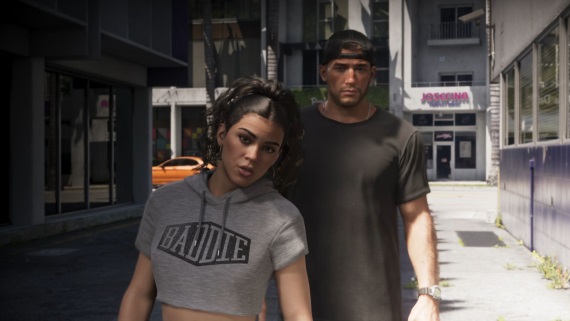
That’s why it makes sense that major publishers don’t want to put their biggest game directly up against it. It makes even more sense to try to get to market before it, so players have time to buy and play their games before Jason and Lucia arrive. But that creates a second problem.
September and October have turned into a digital bloodbath. December will be crowded. November is packed with games trying to claim their space before GTA, and then suddenly there’s almost nothing after it.
Nintendo has Zelda, Blizzard has World of Warcraft, Barbie has Barbie fans, and K-pop has its fans. These games are in segments where GTA 6 may not be a direct competitor. But the situation is different for most major multiplatform games.
And perhaps this is where it’s worth explaining why publishers are so worried about GTA 6 even when their games have nothing in common with it genre-wise. Of course, GTA 6 and, say, an action RPG aren’t competing directly for the same player. But they are competing for something much rarer: the player’s attention. And after GTA launches, Rockstar will have it.
GTA 6 won’t be just another game players finish by Christmas and put away. For weeks, and perhaps months, after its release, it will fill gaming media with stories about easter eggs, secrets, guides, maps, comparisons, technical analyses, discovered details, and, of course, more reports about everything players have found in GTA’s huge world. Social media will be full of clips and theories, and YouTube will have material for thousands of videos.
And that’s exactly the kind of attention every game is competing for, regardless of genre. If you release a major action RPG a week after GTA 6, the problem isn’t that a player will think, “I’m in the mood for GTA, so I don’t want an RPG.” The problem is that far fewer people may hear about it. When an editorial team has five new GTA stories on its homepage, guide creators are covering its missions, and YouTube is full of new discoveries from Vice City, a great new game can easily get overshadowed.
GTA 6 is therefore not just competition for action games. It’s competition for practically every game that needs to capture players’ and media’s attention around the same time. That’s why its impact on the release calendar is much greater than its genre alone would suggest. And perhaps that’s why the most interesting thing about the 2026 calendar isn’t how many games are trying to avoid GTA 6, but what happens to the release dates around it.
Rockstar hasn’t even released the game yet, and it has already forced the competition to change its calendar. Some rushed into September, others are taking over October, some are fleeing to December, and a few are going straight to 2027.
GTA 6 doesn’t have to destroy the November market. It’s enough that it has made the rest of the industry wonder whether to enter it at all.
Popular stories from the last 30 days
Feed4Gamers © 2026











Comments