Dragon’s Dogma 2: Dark Arisen Expands the World with Frozen Norgan and a New Relic System
We played almost an hour of the upcoming expansion to the successful action RPG, in which Capcom significantly changes the rules of the game.


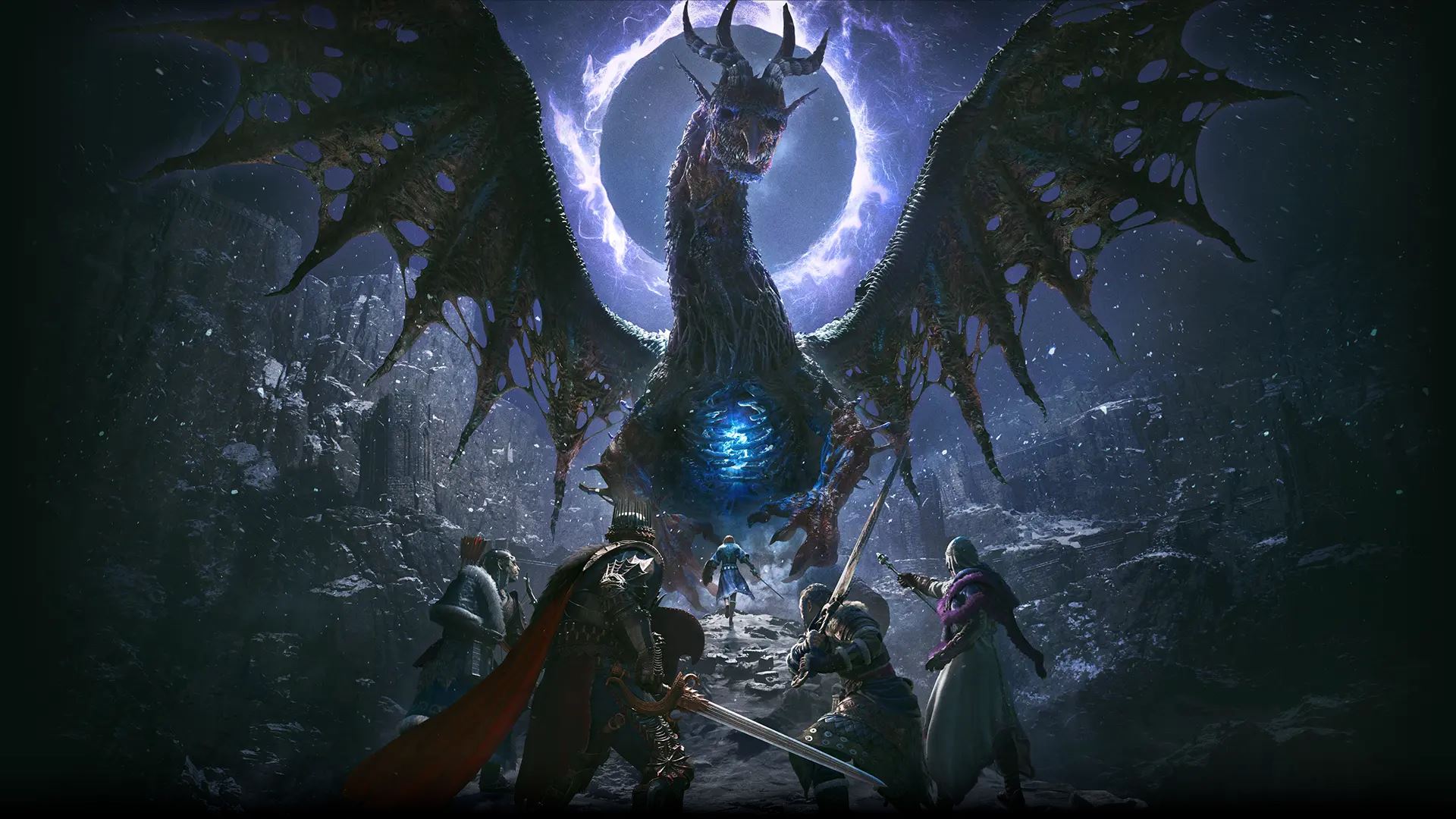
Dragon’s Dogma 2: Dark Arisen takes players to the entirely new region of Norgan, where snow, frost, and weather are not merely scenery but directly affect exploration and combat. The expansion also introduces a new relic system, twelve Lost Rites dungeons, and additional ways to customize the equipment and abilities of the Arisen and their Pawns.
Although more than two years have passed since the release of Dragon’s Dogma 2, CAPCOM is returning to its action RPG with a substantial expansion. Fans had long speculated about whether the sequel would receive an expansion similar to that of the original game, which received the Dark Arisen expansion after its release. The answer came during the June Nintendo Direct, where CAPCOM revealed Dragon’s Dogma 2: Dark Arisen alongside a version of the game for Nintendo Switch 2. At Gamescom 2026, I had the opportunity to try the expansion on PlayStation 5 for approximately 45 of gameplay. From that, I was able to edit together a 15-minute video, which you can find below.
Dark Arisen takes us north of the original map, to an area known as Norgan. It is the so-called Forsaken Dominion, a land that has been largely abandoned and is now inhabited primarily by dangerous monsters and the aggressive Beorcan tribe. Norgan therefore offers an entirely different environment from the greener areas of Vermund or the desert of Battahl.
This time, however, the change in environment does not rely solely on a different color palette. Norgan is built around winter and harsh weather, and CAPCOM wants this theme to directly affect gameplay. Players must contend with snowstorms, wind, low temperatures, and reduced visibility. Right from the start, they therefore have the option to equip their character with warmer clothing that offers better thermal properties.
While traveling through Norgan, I also encountered other ways in which the environment can affect combat. Avalanches can knock a character out of a focused attack, hanging icicles can be dropped onto enemies, and snow can also be used when manipulating objects. For example, if you kick or push a boulder down a snow-covered slope, it can gather more snow and gradually grow larger.
The wind itself also works in an interesting way. According to the developers, it is not merely an effect intended to enhance the feeling of being in a snowy region. When directed correctly, the wind can help with tasks such as leaping across chasms or climbing large enemies. Weather therefore adds another layer to the decision-making involved in handling individual situations.
Ice can be used in a similar way. Some frozen surfaces can be broken, allowing you to send enemies into the water. This is particularly interesting in Dragon’s Dogma 2 because water is connected to the Brine, a dangerous red entity capable of devouring living beings. An ordinary fight can therefore quickly turn into a situation in which the environment itself is a more effective weapon than a sword. Just be careful not to end up there yourself.
Using the surrounding world was one of the things that distinguished Dragon’s Dogma 2 from many other action RPGs, and Dark Arisen develops this principle further. It is not limited to prepared traps. Some situations arise dynamically, and players must react to what is happening at the time.
New enemies also appear in Norgan. Among the most notable are the Beorcans, large human warriors resembling Norse or Viking fighters. Some of them have specialized abilities, and these enemies use their own equipment and monsters, including direwolves.
Pawns remain a very important part of the journey. They help the player navigate the extensive area and often point out interesting opportunities that could easily be missed during independent exploration. They can also comment on what is happening around them and suggest solutions to problems. During the demo, it once again became clear why Pawns are one of the most distinctive parts of Dragon’s Dogma. Their reactions are not merely a functional navigation system. They can spontaneously join the fight, rescue the player, and create situations that feel unpredictable.
Dark Arisen does not only change the world itself, however. One of the most significant new features is the Relic system, which introduces a new way of obtaining equipment. Relics drop from enemies, and their rarity also depends on the strength of the opponent. At first, it may not be clear what you have actually obtained. A relic may have only a very general description, with its true contents revealed by a local woman named Jiera, who can activate them. Rift Crystals are required for this process.
The result can be a new weapon or piece of armor, but relics do not necessarily provide only higher stats. They can also have special properties, modify existing abilities, or add new options for the Arisen and their Pawn. The resulting equipment can therefore affect how you build your character.
The system is deliberately built around randomness. Two similar relics do not necessarily produce identical equipment, giving players a reason to return to Norgan and search for more. CAPCOM is thereby creating a loop consisting of exploration, acquiring relics, having them appraised, and then using the resulting equipment on subsequent expeditions.
Interestingly, this system is not entirely new. Fans of the original Dragon’s Dogma may remember Dark Arisen from 2013, where the Bitterblack Isle area contained cursed items that first had to be purified before their true form could be revealed. CAPCOM is therefore returning to a similar idea, but this time it is not placing it within a single large dungeon.
Relics are tied to Norgan, but the equipment you obtain can subsequently be used outside the region as well. This creates an interesting connection between the new region and the original map. For example, players can obtain stronger equipment in Norgan and then return with it to familiar areas.
Another major new feature of the expansion provides a further reason to do so: twelve Lost Rites dungeons. These form a separate series of challenging locations that gradually become more complex. Their depths are said to contain rare and highly sought-after pieces of equipment.
These two parts of the content are meant to be interconnected. You do not have to complete them in a strict order. If, for example, you reach a Lost Rites dungeon that is too difficult for you, you can return to Norgan, search for more relics, improve your equipment, and then try the dungeon again.
Norgan’s design itself is also intended to encourage players not to take only the shortest path to their destination. One example is the mechanic involving a direwolf named Freki. After completing the introductory quest, you can feed him meat at any time and then send him out to hunt for hidden relics. The player simply follows his trail and lets him lead them to the next treasure.
A similar principle applies to tracks in the snow. If an enemy steals relics, it may not be immediately clear where it went. Its tracks can lead across the snowy landscape to a nest, where, in addition to the stolen items, you may discover further loot.
Compared with traditional quests, Dark Arisen therefore places greater emphasis on exploration itself. Quests remain part of the game and move the story forward, but according to the developers, they are also meant to encourage players to venture into different parts of the new region and begin discovering its systems.
The combat system has also received a fairly significant adjustment. While the base game gave players four active abilities, Dark Arisen will have six. This is a welcome change, as the limited number of available abilities was one of the more frequently criticized aspects of the original game.
This allows a character to have a wider range of options available at any given moment, meaning players do not have to change their equipped abilities as often depending on the situation. At the same time, they will need to get used to the new button combinations used to activate all six abilities.
The combat retains Dragon’s Dogma’s distinctive feel. It is slower and more demanding than in many competing action RPGs, and individual strikes have noticeable weight. Players can climb large enemies, attack their weak points, and use the environment, but they can also occasionally find themselves in situations where animations or the physics themselves take control of their character.
This is most apparent when fighting large bosses. The demo featured a huge yeti-like enemy, defeating which took up a considerable amount of time. Climbing over its body is impressive and creates a sense of a large-scale battle, but stamina consumption can lead to repeated falls and interrupted attacks.
The highlight of the demo, however, was a different opponent. An enormous undead dragon was waiting in a mountain fortress, one of the main new monsters in Dark Arisen. Its health was divided into numerous segments, and its attacks were not the only problem. The dragon could spew additional undead enemies from its decaying body and mouth, which then joined the fight.
The fight gradually grew into a large battle in which it was necessary to keep track not only of the dragon itself but also of the new enemies appearing around the party. As with other large monsters, it was possible to climb onto its body and focus attacks on vulnerable points.
The demo did not end with its defeat, however. After the player deals enough damage to the dragon, a story event takes place during which the dragon restores its health and a new character named Eir enters the scene. She claims that the dragon is her burden, and the preview then ends.
Although the approximately hour-long preview naturally could not reveal everything Dark Arisen will offer, it is clear that CAPCOM does not merely want to add another section of the map. Norgan has its own rules, environmental mechanics, enemies, and equipment acquisition system. Above that stands a series of Lost Rites dungeons intended to create another reason to return to the new region repeatedly.
The most interesting aspect may be the way these systems are connected. Relics are meant to support exploration, exploration is meant to lead to better equipment, and that equipment in turn allows players to tackle more challenging Lost Rites dungeons. Norgan is not a closed-off end point to the game, either. You can bring the equipment you obtain back to the original world and use it in further challenges.
Dragon’s Dogma 2 was never a typical action RPG, and Dark Arisen does not try to eliminate its idiosyncrasies. Quite the opposite. It expands the systems that defined the game, adds further ways to interact with the world, and gives players even more reason to leave the main path and simply venture into the unknown.
And that may be the expansion’s greatest strength. Instead of another linear story-driven adventure, we get a new space where experimentation, following tracks, using the weather and environment, searching for hidden treasures, and gradually discovering everything frozen Norgan has to offer are meant to pay off.
Popular stories from the last 30 days
Feed4Gamers © 2026















Comments